Week 7 – Publications

This week’s course work had a number of tasks.  First we were to look at our personal libraries or pilebraries as the case may be and share an image with our classmates.  It was interesting to see people’s varied interests reflected in the books in their collections and how and where they kept them.  My collection here in Scotland is relatively small as most of my books are still in the U.S., but the ones I have clearly reflect my interests and the books I have been reading as part of the MA.

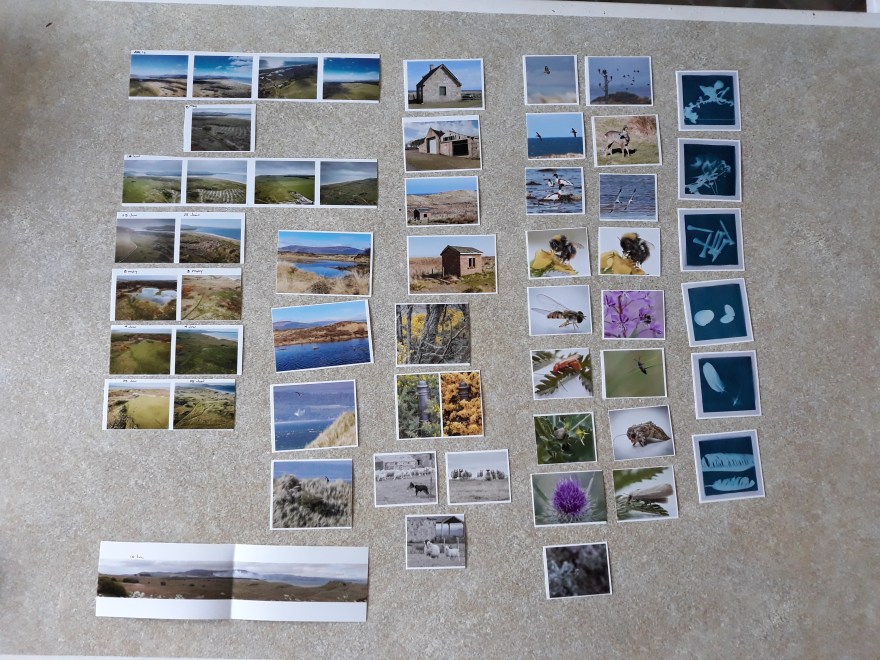
The second task for the week was to amass “all” of the work made to date and put it “on the wall”.  That proved to be a tall order given I have a huge number of photos related to my project and the time and expense were prohibitive.  Furthermore the repeat photography elements, while they show subtle changes in the landscape do not yet in my opinion have enough context in just a few months to tell the story I hope to tell.  However, there was enough demonstrable change to print and arrange some examples that show where the story might be headed.  I also printed a good many examples of the the other categories of photos that fit the themes of Coul Links; From Above, Below and In Between.  From this collection we were to curate and organise into something that could be become a publication in some form.

20180719_181312

The final task of the week was to create a “dummy” publication.  This was admittedly a bit of rushed attempt, and what started as a concept for a Zine type publication of an exhibition guide began to look as though it could well be the beginnings of one or more bigger publications.  Having decided to do a local exhibition I likely will publish a small exhibition guide using the only the photos I am exhibiting.  This exercise though helped to coalesce concepts that will be more relevant as I move closer to my FMP and the outputs I envision as my project progresses both during and after the MA.

I created the book just with A4 printer paper bound with a few stitches of thread.  It was organised around the themes mentioned above and used the cyanotypes I did a few weeks ago as section breaks.  It is conceptual at this point and requires refinement into a final form or forms and there would be words to accompany either an exhibition guide or a larger book.  Once the dummy was assembled, we were to video it and share it in preparation for the week’s webinar.  Here is the link and password.

Dummy Book video

Password:  Falmouth

Week 6 – Reflections

I entered the week thinking that I would do an exhibition in addition to the Landings 2018 and then part way through began to doubt whether there was time and an adequate body of work to do it justice.  By the end of the week I had convinced myself to only do the online exhibition and to do planning about a physical exhibition.

Work I made during the week and a subsequent conversation with Gary during his office hours convinced me to reconsider again and pursue a local exhibition.  I believe I have enough work from aspects of my overall project to mount a small exhibition.  The focus will be more on the place and its inhabitants than on the larger repeat photography aspects of grander changes to the landscape, though I may include a few elements in a triptych or polytych.

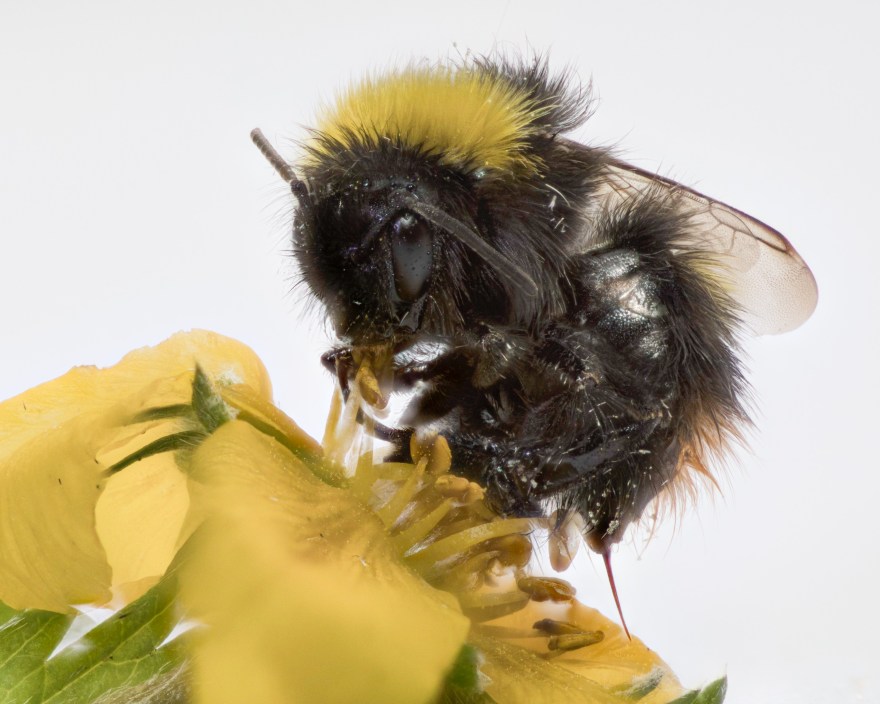
I find my work evolving during this module.  My focus in past has largely been up and out looking at birds and the landscapes they inhabit.  I also have produced images with rich colours and postcard lighting.  Of late, I have rediscovered the intricacies and rich biodiversity of the world  beneath my feet and a technique in which to capture that world in a more complete way.

Bombus pratorum-22

Hover Fly (Episyrphus balteatus)-25


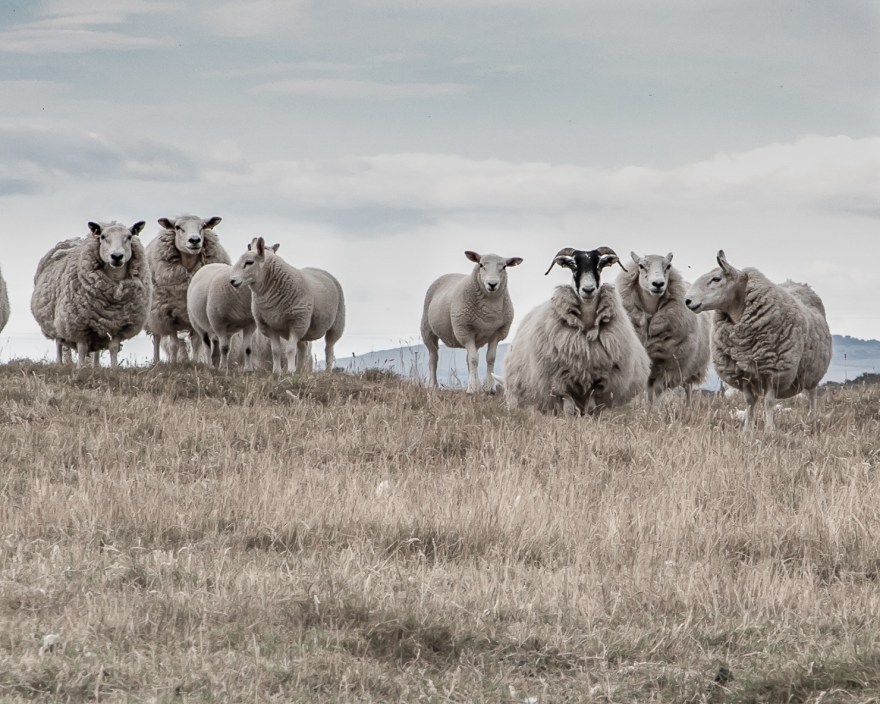
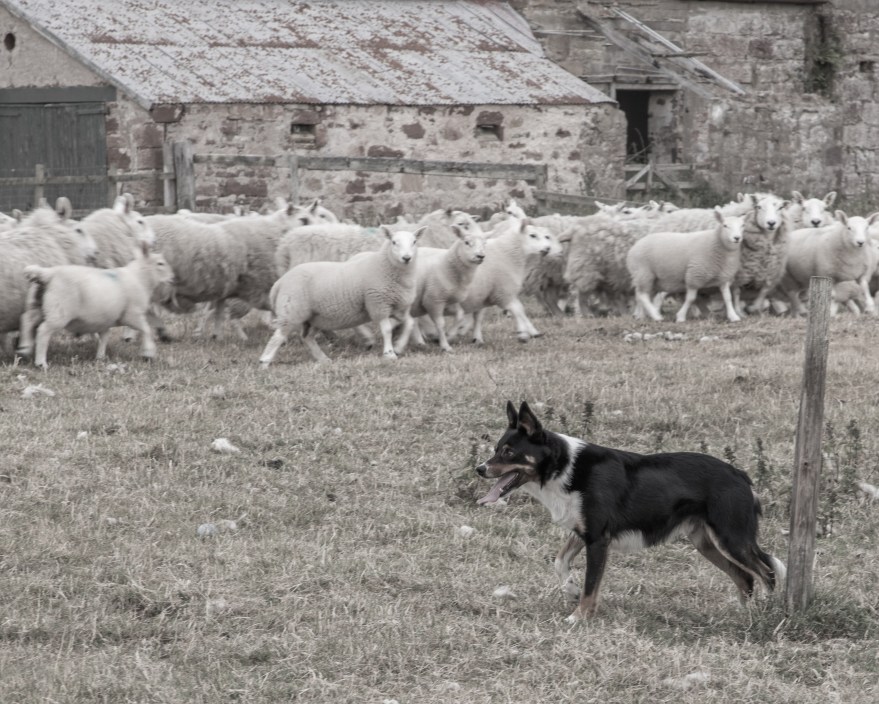
While I was shooting macro work I suddenly found myself in the middle of a flock of sheep being moved from one pasture to another on Coul Farm.  While it was very much a current event, in and around the dilapidated steading buildings, it evoked a feeling of the past with a single shepherd and his dog working this herd as has been done for hundreds of years.  It also struck me that if the golf course goes ahead, it will be a thing of the past on this particular plot of land.  When I was processing the images, it felt wrong to use my normal approach in colour and yet monochrome didn’t work either.  I found a point of desaturation that was not quite complete that created real impact to the photos.

Coul Farm Sheep-2

Coul Farm Jake and his flock-7582-2

I am confident that these and other images from my WIP will make a good exhibition that will appeal to the people here in Dornoch who will see it.


Week 6 – Inspiration

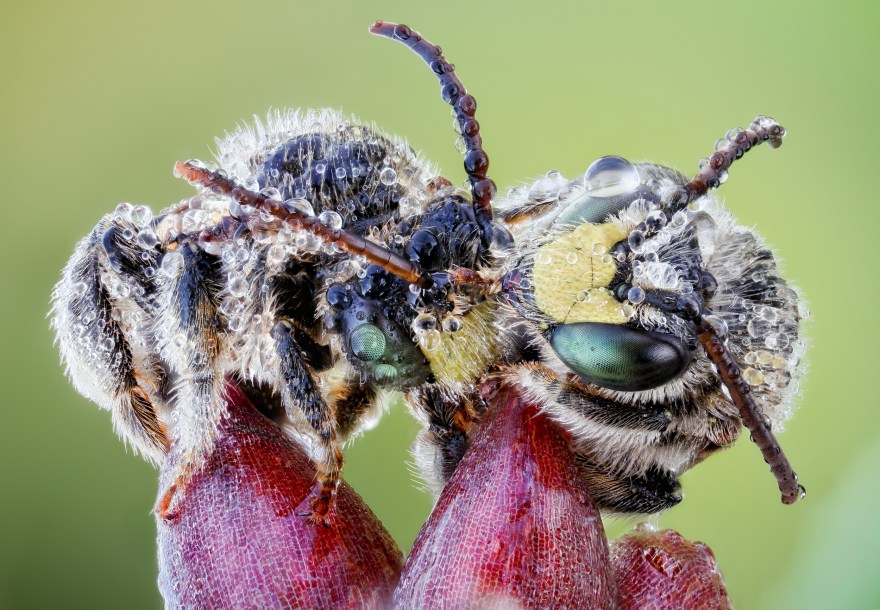
In trying to ascertain the species of some of the insects I had photographed with a macro lens, I stumbled across the work of John Hallmen and was utterly awestruck.  I couldn’t understand how it was possible to obtain such clarity across the entire depth of field without diffraction.  As I read an interview with him and subsequently visited his website I learned he uses photo stacking and uses sometimes over 50 images to obtain one.   The image below is an example of extraordinary work Hallmen does in the field and in studio uses both natural and augmented light sources.  He then uses Zerene Stacker to process the series of images.

8601273688_5ba52a2694_o.jpg


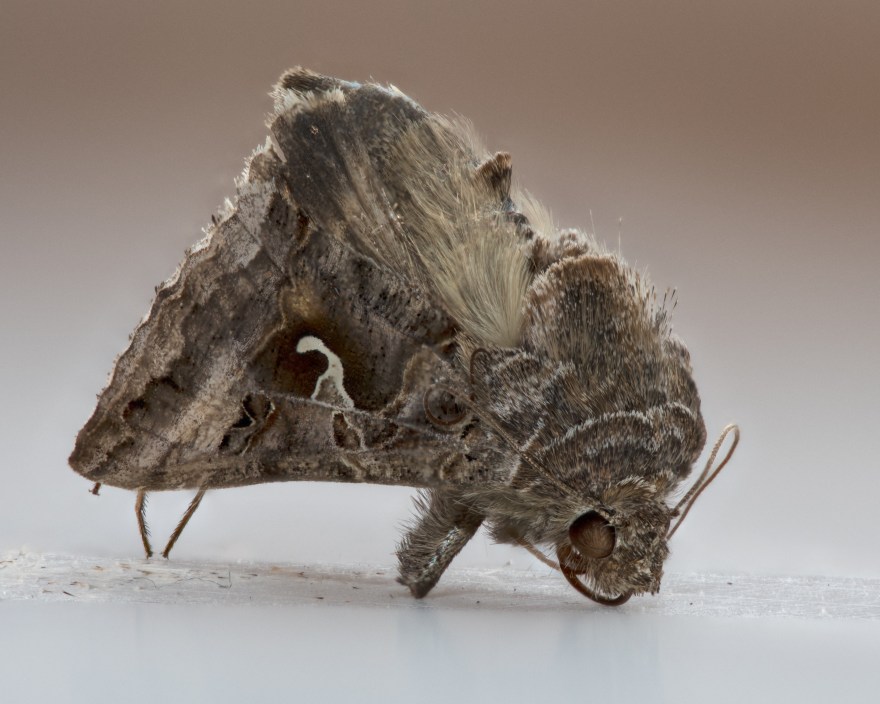
Completely fascinated by this process and the prospects for my practice I obtained Zerene Stacker and set about experimenting.  As luck would have it on this rainy day, I found a dead moth on one of my window sills and it was a perfect subject for experimentation as it was not about to move.  Tripod, flash, cable release and a 100mm f2.8 lens on my Canon 5D MkIV and off we went.  A total of 18 images in minutely different focal planes were taken at a slightly oblique angle of this moth which is about 2cm in length.  Results of my first attempt are below and quite impressive.

Moth Stacked-17

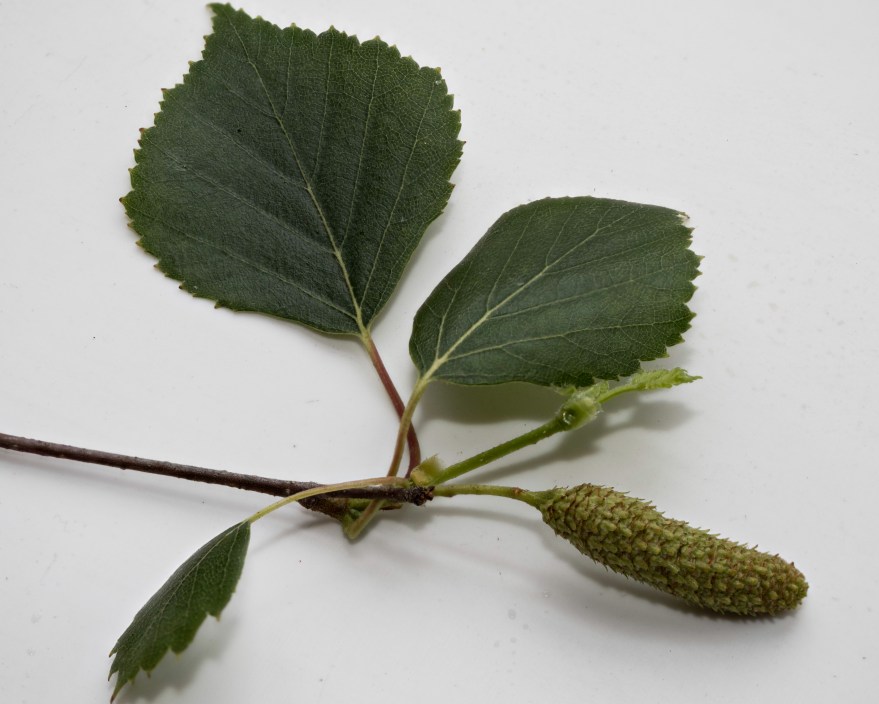
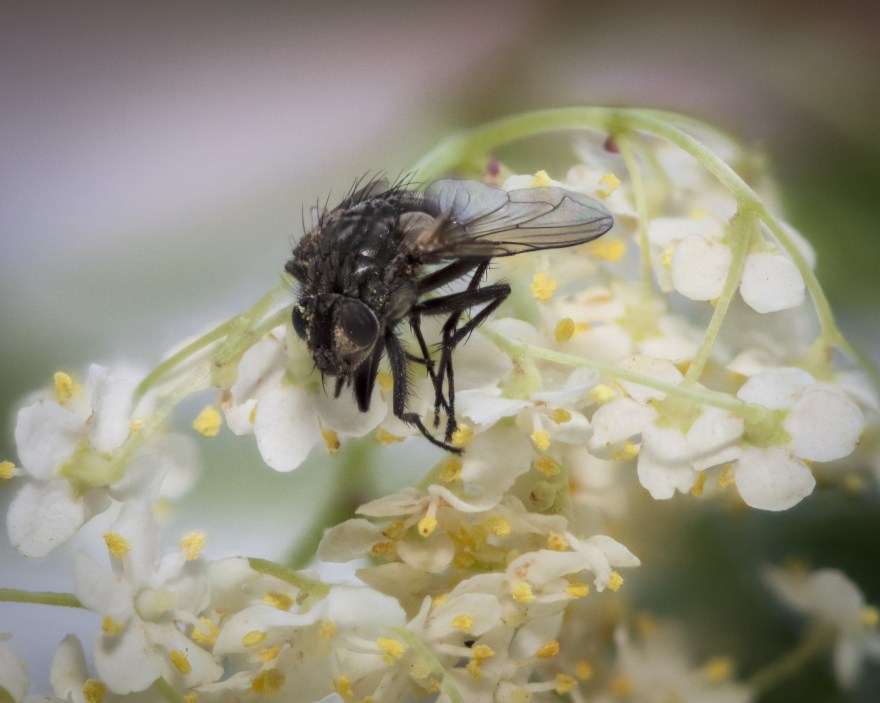
My experiments continued with flowers and a fly.

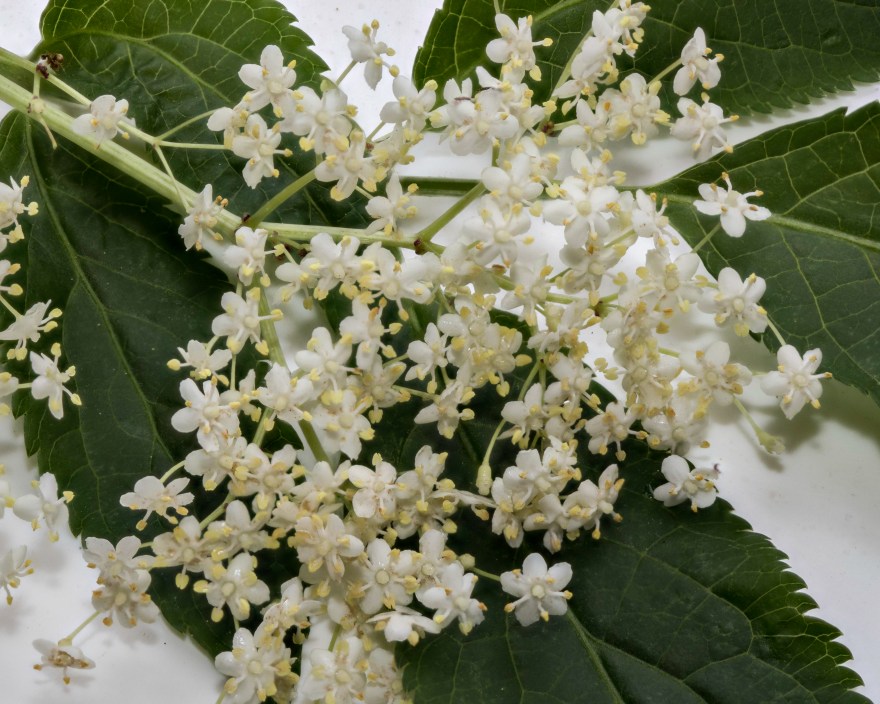
Elm Stacked-55Fly Stacked-01White Flowers Stacked-43

This is definitely a valuable technique to employ along with macro photography.  I am looking forward to experimenting with it in landscape work as well.  There might be some interesting effects possible with ND filters and longer exposures at various focal depths and then stacking.

John Hallmén. (n.d.). Retrieved July 8, 2018, from http://www.johnhallmen.se/2016/4/25/morning-stretch

Week 5 – Reflections on One to One Tutorial

I found this a productive session and frankly altogether too short to really discuss all I might have liked to discuss.  Nevertheless, Michelle provided a lot of encouragement and offered some insights and opinions about some of the work I showed.  I was a bit surprised by some and would at some point like to delve further into the “whys” behind the comments.

I can take a technically good photograph, but my usual subject matter is one in which it is somewhat difficult to distinguish one’s self from the other many fine professional and amateur natural history photographers in the world without resorting to gimmicks or excessive manipulations, both of which strike me as antithetical to whole point of natural history photography.  So we return to the question of what makes my work unique and identifiable?  I do not yet have the definitive answer to that question.  My work is becoming more focused on outcomes; that is to say I take fewer photos just to take a photo of something that catches my eye or interests me and consider what will I do with the photo and how does it fit or support an output in some form.  I am much more aware of the need to tell a story with my work.  In some of my projects I begin with with a clear idea of the story line and am able to capture images to support that narrative.  In my research project though, it is impossible to determine how the story will end at this time, and it may be many years in fact before we know the true outcome.  So while there are clear elements to the plot, it is somewhat of a mystery story: who is the villain and who is the hero, do either exist, can nature and man work together in harmony in this instance?

Michelle suggested I look at the work of Stephen Gill and Susan Derges.  I found Gill’s work unappealing, uninspiring and largely uninteresting, both in subject matter and technique.  He is an experimental photographer and he does unconventional things to make his art, for which he is to be commended, and he obviously has attracted an audience, but his art does not resonate with me.

On the other hand, I was fascinated by the work of Susan Derges.  I didn’t realize at first that she specializes in cameraless photography and I found myself wondering how she managed the perspective in many of her photos.  Her work dances along the border between realism and abstraction, and contains just enough of each to capture and hold my attention.  When I then learned that much of her work is constructed in a darkroom I was completely gobsmacked.  Michelle has urged me to consider whether there is a place in my project for something along the lines of the photograms I did in last week’s activity.  Derges work is far more sophisticated than my simple cyanotypes, but it has shown me there are perhaps possibilities of which I was not aware and had therefore not considered.

So the search for Ashley Rose’s unique perspective continues.  Under every rock and leaf there seems another possibility.  Perhaps this is another journey with no final destination, but rather one of exploration, discovery, experimentation and reflection.  Yet another story with an uncertain ending.  Stay tuned for future episodes.


Derges, S. (n.d.). Susan Derges. Retrieved July 6, 2018, from http://susanderges.co.uk/
Gill, S. (n.d.). Stephen Gill Portfolio. Retrieved July 6, 2018, from https://www.stephengill.co.uk/portfolio/portfolio


Week 5 – Exhibition

  • Five key words describing your practice / project.  –  Nature, Change, Overhead, Underfoot, Unseen
  • One sentence describing the aims of the work you might display.  I aim to show elements of a place over time and  how the place itself and its inhabitants react to changes, both natural and anthropogenic.
  • One sentence describing roughly where and what your display could look like (e.g. a white-walled gallery exhibition of 10 small framed prints).  Medium scale prints and panoramas with the possibility of some multimedia elements in a gallery like space in Dornoch, Scotland near where the photos are taken.
  • Two images that best illustrate your practice.
  • Aerial north-0010.jpg
  • Beetle-6713.jpg

Making sense of multiple photographs over time

20180628_223953

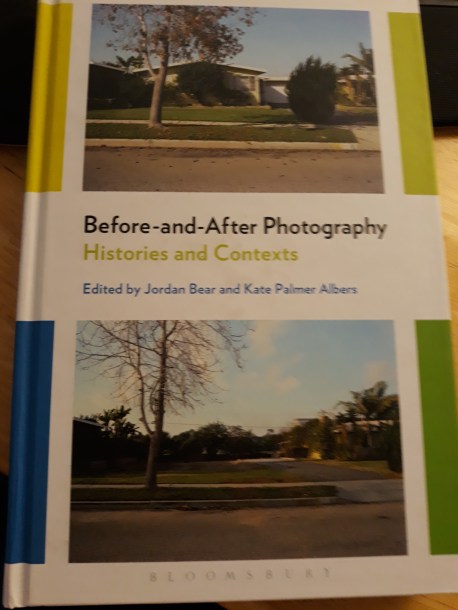
I just finished reading most of this book and found it quite thought provoking.  There seems a great muddle even amongst the “experts” in the epistemology and ontology of photographic practise that includes more than one photograph taken of the same subject.  Is it “before and after”, rephotography, repeat photography, a series, or “then-and-now” photography?  Depending on which source one might choose to use, it could be any one, all, or none of these labels.

Albers and Bear write in their opening chapter:

“Among the most significant orthodoxies in the recent historiography of photography is a shared conviction that a single, authoritative account of the medium is both impossible and undesirable.  A tenet of much of the most innovative scholarship since the 1970’s, this commitment to a plurality of histories is summed up in the scholar John Tagg’s haunting disavowal: “Photography as such has no identity…its history has no unity.  It is a flickering across a field of institutional spaces. It is this field we must study, not photography itself” 

And precisely because of photography’s lack of identity outside of specific discursive and institutional contexts, the art historian, the climatologist and the sociologist have no common idiom for discussing their photographic research.

As such, we focus on before-and-after photographs as a strategy so commonplace that virtually every disparate photographic discourse has enlisted it.” 

It seems to me the ubiquity of photography and its employment across virtually every social, scientific and artistic discipline renders photography in some ways a tool of the discipline in which it is being employed rather than an end unto itself.  I think this is the point Tagg was trying to make and the argument Bear and Albers put forth that there may be strategies employed across those disciplines that provide a basis for a common framework.  However, the distinctions they make between the related tropes that share in common the employment of more than one photograph are less than clear cut as evidenced by the essays that comprise the remainder of the book.

In the afterword, James Elkins writes:

“Because I am not sure how to distinguish rephotography from before-and-after photography, or before-and-after photography from individual photographs, I prefer to think of those odd experiences as extreme cases of the sorts of seeing that are provoked, unexpectedly and in general, by photographs of many kinds. If seeing photographs involves self-indulgent, myopic, or even anascopic seeing, and if it elicits subjunctive, reparative mediations on what was, what came between, and what came after, then before-and-after photography may be more an extreme kind of photography, a limit or test case, than a separable genre or mode or practise.  It may be a kind of photography that helps us to understand what some photography can be.”

Bear and Albers try to distinguish before-and-after photography as two photos punctuated by a singular unseen event that causes the change observed in the photographs, and which requires the viewer to imagine the nature of that event.  Rephotography, such as practised by Mark Klett and others, is likewise two photographs temporarily separated by an undefined period of time in which the viewer is still required to discern the changes and imagine what cause or causes effected the changes.  Both before-and-after photography begin from a single photograph and often with no intent to necessarily take a second photograph of the same place in a different time.  Occasionally, one might have foreknowledge of an impending event that would lend itself to a before-and-after trope.  The only way I can distinguish then-and-now photography from rephotography in either method or intent is rephotography necessitates taking the photos from the same place with as close as possible replication of the original perspectives.  Jem Southam’s work The Painter’s Pool is more of a then and now piece of work giving a feel of a place over a period of time without trying to recreate an original photograph.

Repeat photography, on the other hand, begins with intent to observe changes in a place over time by taking two or more photographs from the same place over some again undefined span of time.  It begins also with a belief that observable changes will occur by known or unknown single or multiple causal factors.  And herein comes the rub.

If I know that a hurricane is about to hit or a volcano about to erupt and I take photographs of the area to be affected by the event with the intent to return and photograph the aftermath, am I engaging in before-and-after or repeat photography?  Does it matter? If I stay and take photographs during the event it is no longer unseen and therefore does not fit the definition of before-and-after photography, but is it repeat photography with a relatively short temporal displacement or is it a series?  Again, does it matter?  If I take a series of photographs that captures the full sequence of an event, but then choose to only show the first and last in the series and leave the event unseen, is that before-and-after photography, or have I just made an editorial or curatorial choice?

Aren’t all of these distinctions somewhat arbitrary and vague?  Are they not in fact a continuum of sorts with boundaries that overlap as a function in part of the epistemological perspective of the project?  Perhaps what matters is that all the photographs provide some level of information imbued by the apparatus and the choices of the photographer that remain to be decoded by the viewer.  Furthermore, what seems common among virtually all of the examples described in the book, regardless of which trope one might assign, is none seem be approached by the photographers with an agenda, and rather are largely indexical in character.  The assignment or interpretation of significance seems to come in part from the editorial and curatorial choices made by the photographer, and from the viewer and whatever perspectives and biases they bring to viewing.

What relevance does this have to my project?  I am in large part observing a place over time.  I entered the project with the idea this was a classic repeat photography project in which I would observe and record both natural and anthropogenic changes on a landscape over a period of approximately two years.  However, I have foreknowledge that a major anthropogenic event will occur that will cause dramatic changes in the landscape.  Has this become a before-and-after project or because I will photograph the changes as the event occurs does it become a series?  Does the trope to which it is assigned depend on what and how I choose to show the results?  Can it be everything and none of these things depending on those choices?  And, does it matter?  Can it not just be what it is? Can I not just use photography as epistemological and ontological tool to understand my world?

I think I can.

Tagg, J. (1988). The Burden of Representation: Essays on Photographies and Histories. Minneapolis: University of Minnesota Press.
Bear, J., & Albers, K. P. (2017). Before-and-After Photography; Histories and Contexts (1st ed.). London; New York: Bloomsbury Academic.

Week 4 – Hands Off

The week’s presentations centered around strategies that are outside the conventional approaches to photography; at least the ones that I use in my practise.  I am not comfortable in general using work I have not created so I found many of the strategies discussed this week quite strange.  Although I have to admit projects such as Jenny Odell’s Travel by Approximation were extremely innovative and clever.

The week’s work has certainly challenged some of my well ingrained notions of what photography is and can be.  The idea of not using a camera was particularly difficult to embrace, especially when trying to find a way to relate it to my project. But that was the crux of this week’s activity.

This task asks you to reconsider your relationship with your preferred apparatus by NOT using it.  You have 24 hours to produce a mini-series of five images relating to your research project, without using apparatus that is familiar to you.  All images must be produced on Wednesday 27th June between 00:00am and 23:59 (local time).  Understandably, many of you will have other commitments during this period. If so, you are encouraged to see these as a challenge and incorporate them into the task somehow. After all, it is possible to be a lot less conspicuous without a camera.

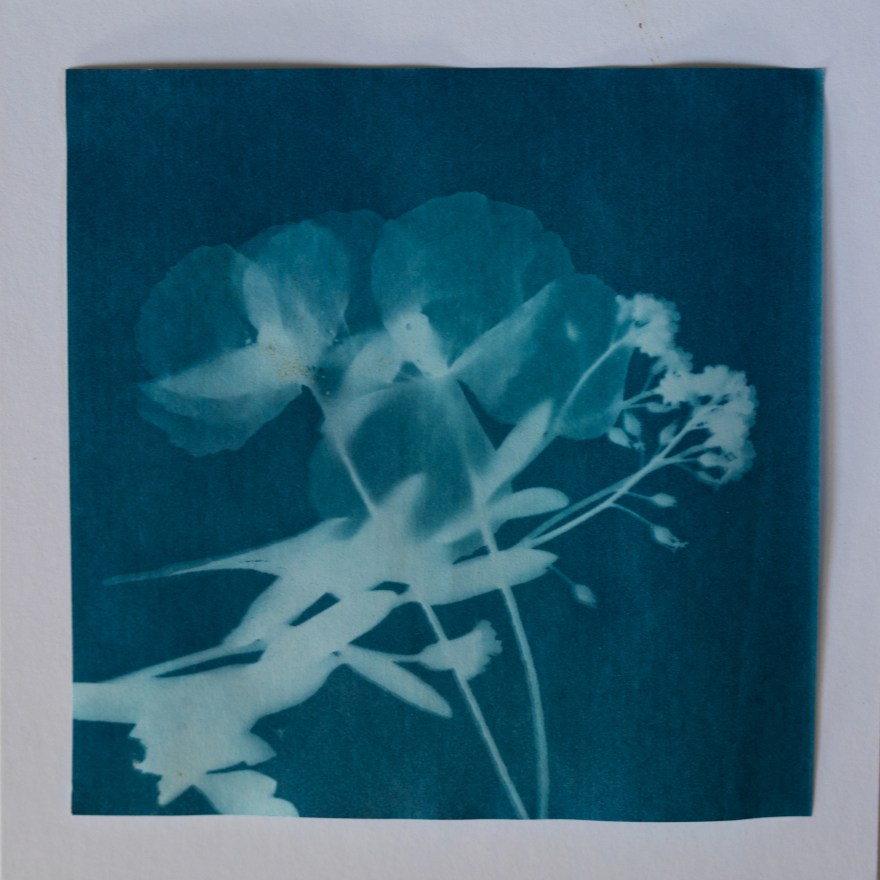
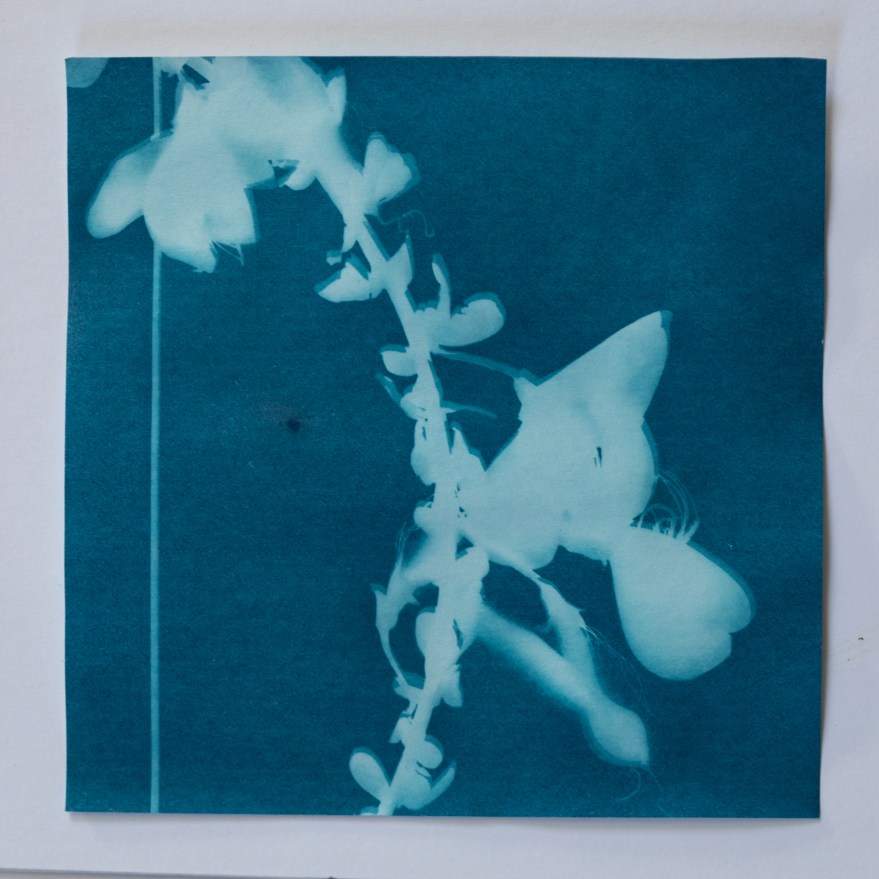
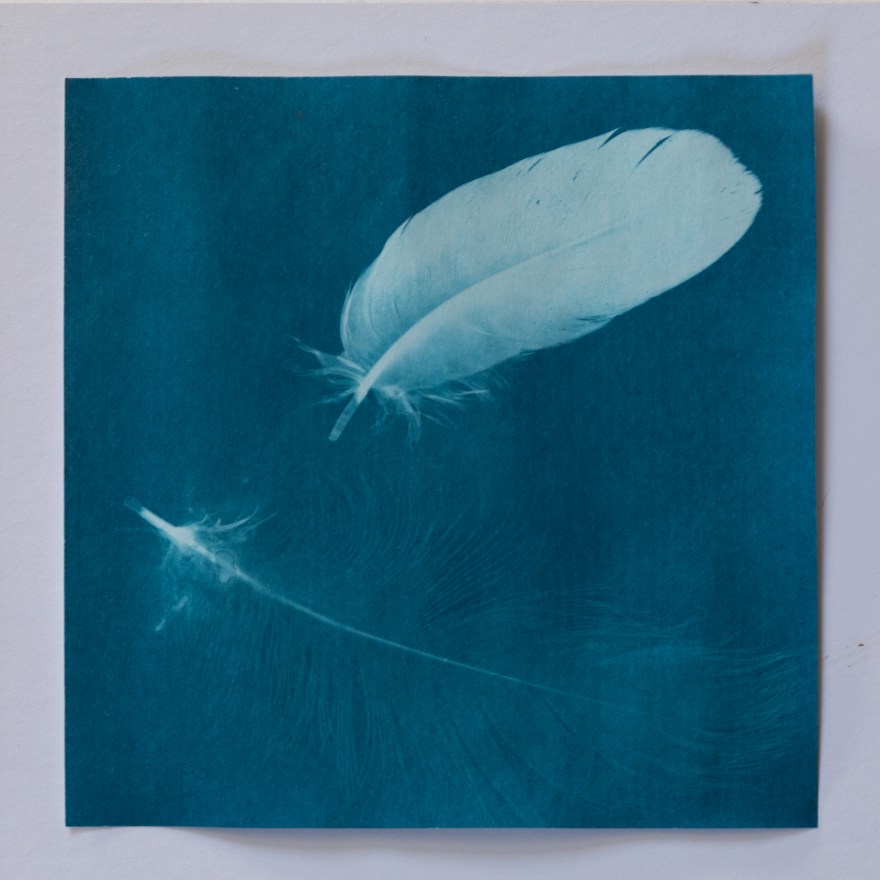
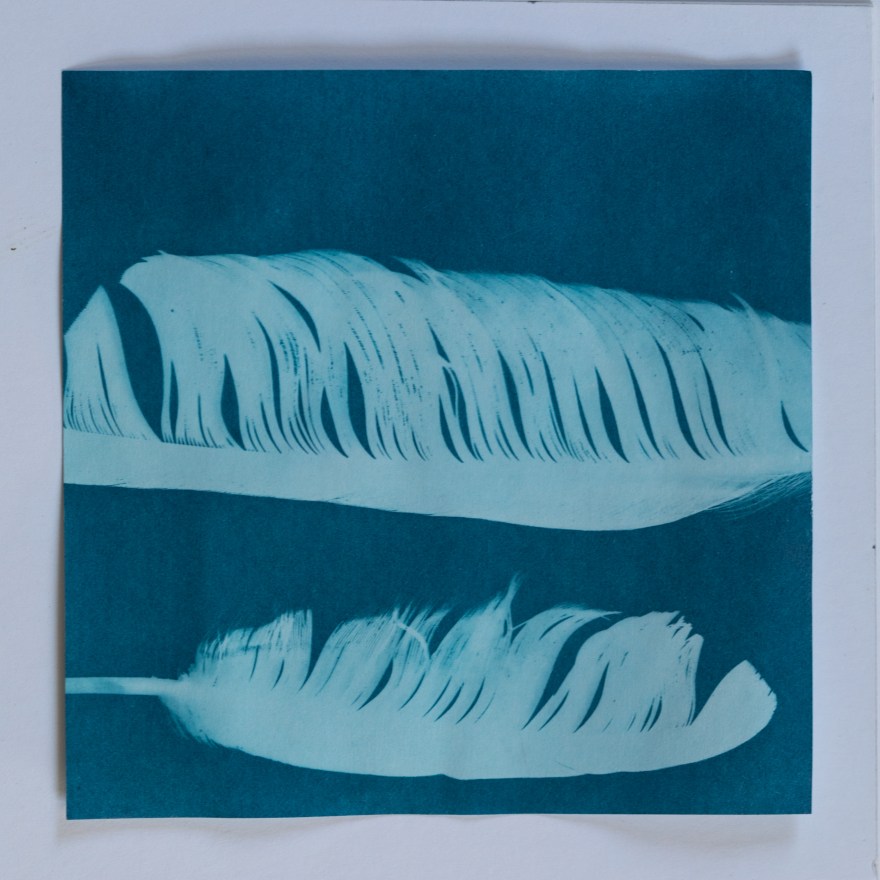
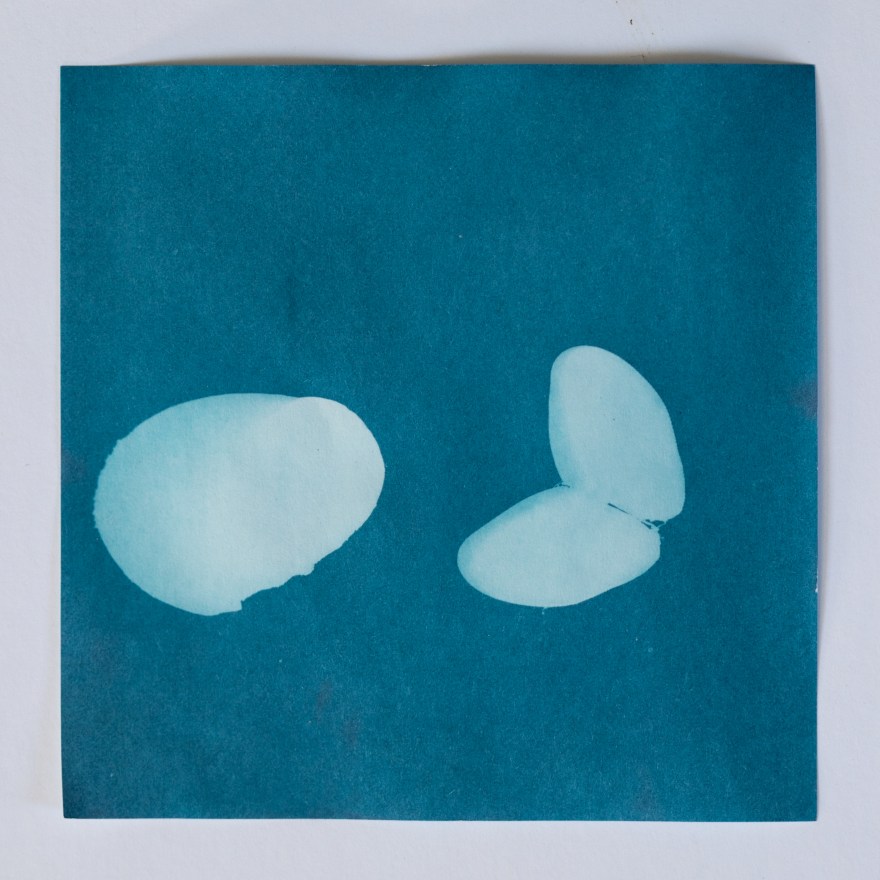
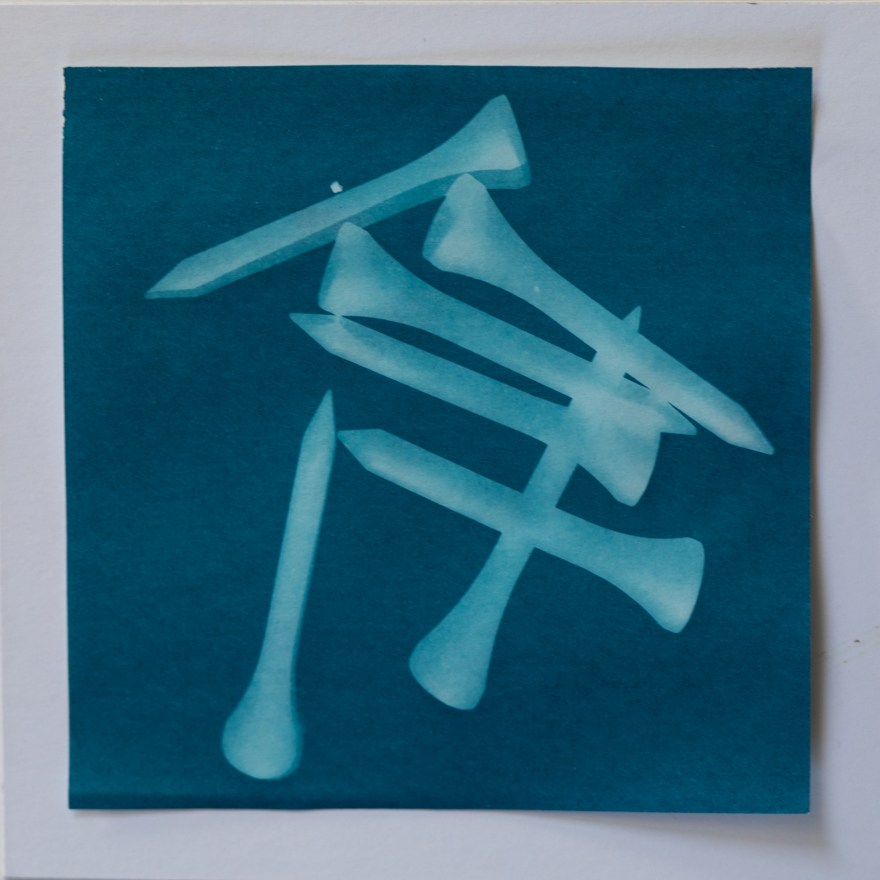
I thought about using my mobile phone camera because for the type of photography I do it is not a preferred apparatus, but it is one with which I am familiar.  I don’t have access to 35mm film or medium format cameras here.  Google Earth has satellite views of my project area which I have already used, and there are other photos on the web of Coul Links taken by developers and eco-tourists, but not much that seemed interesting to co-opt.  So in the end I decided to try using cyanotype paper using a Sunprint kit I obtained through Amazon.  I collected bits of plants feathers and shells and made a series of prints.  I also made one using golf tees as a symbol of what is likely to happen on the site.  Here are the results.

Wildflowers-7233
Wildflowers
Broom Flowers and Leaves-7248
Broom Blossoms and Leaves
Feathers-7241
Feathers
Feathers-7244
Feathers
Gastropod and Bivalve Mollusc Shells-7230
Gastropod and Bivalve Mollusc Shells
Golf Tees-7238
Golf Tees


While I didn’t find this exercise particularly useful in terms of applicability to my project, I did rather enjoy to process of creating these images.  First, trying to figure out what I might be able to accomplish with what I could get my hands on on short notice, and that had some relevance to my project was interesting and challenging, and forced me to look at possibilities I would have never otherwise considered.  Second, once deciding to do the cyanotypes, what materials could I find that would lend themselves to this particular media and could I compose them in an aesthetically pleasing way?  And lastly, the process of exposing the image itself yielded pleasantly surprising results.  The sun was quite strong and the exposures were about 1 1/2 minutes.  I was particularly surprised at the dimensionality of the golf tees and the delicacy of the feather images.  The texture in the wildflower print caused by the relative difference in transparency between the wild poppy and the other flower was another surprise.  So while I cannot see a practical use for this particular strategy and surface in my project, that is not to say there is not a place for something like this in another project someday.  And if it is not this surface, I have been awakened to the fact there are other ways than a DSLR to create images.


Critical Research

I have spent a great deal of time these past months reading and trying to understand what I have done, what I am doing and what I want to do as a photographer.  I at first found reading the paragons of photographic theory both difficult and cumbersome, and I struggled to find the relevance.  I have also been researching sources on techniques such as repeat photography and related scientific fields that have employed repeat photography as an aid to understanding.  I have looked at more works of other photographers in the field of natural history photography and other genres than ever before in my life to see if and how their work is different from mine and what I might learn from those who are considered among the best in the field.  I have allowed myself the freedom to pursue personal projects that are not related to my MA project proposal, because I enjoy other genres and because those each teach me something about photographic technique and story telling; the area which I considered a great weakness entering the MA course.

What I have not been doing heretofore is adequately documenting this research in my CRJ and now I must begin to rectify that shortcoming.

Week 3 – Making a Zine, Collaboratively

Among this week’s tasks was an assignment to form a group, crowdsource images and create a Zine.  I must admit to not really knowing what a Zine was before this so of course I was the perfect choice to lead our group.  The group of seven came together quickly and coalesced around one of the two ideas I proposed.  With Father’s Day being last Sunday we collectively agreed it was a timely topic and that we would ask people to take a photograph of something or someplace that evoked a memory of their father and then to write a few words on why that particular image was significant.  While everyone liked and embraced the concept we chose, I think to a person we were all pleasantly surprised by the response we received and moved by many of the images and stories.  There was something powerful in the combination of the images and their accompanying stories; something unique in each, but relatable to all.

We in total received close to 50 submissions, many of which were very poignant, some whimsical, some happy and some sad.  We each posted the photos and stories we received to our space on Canvas, and then had a group webinar to curate the collection and agree on what format we liked for the Zine as well as making assignments to complete the production.

The group worked very well together throughout the process and we were able to use both the Canvas discussion space and a WhatsApp thread to discuss progress, communicate assignments and decisions contributing to the efficiency in which we were able to complete the assignment.  While the old adage of “too many cooks spoil the broth” could come in to play in a collaborative effort, it was not the case here.  A few of the group had produced Zines or at least experienced Zines before and that was helpful in assembling and publishing the final product.  Everyone of our group participated, cooperated, and collaborated to collectively create our Zine, the link to which is below.

Dad. A Curated Look at Fathers – FINAL – PRINT RESOLUTION

How does this relate to my practice and what can I take away from this exercise that might influence my practice in the future?

My practice has historically been rather solitary and since I rarely photograph people, quite absent collaboration other than with my husband who often accompanies me on shoots and assists me in carrying kit and ensuring we do things safely.  Many of my thousands of photographs were never seen by anyone but a few close friends or family.  So it is only relatively recently as I make my work more public and contextual that I have come to appreciate that while I may not collaborate much in the making of my images, there is value in having others involved in the process of getting my images into public view.

My years in the corporate and consulting worlds taught me the value of “cold eyes” reviews as we are often too close to what we create to be able to understand how someone seeing something for the first time might see it.  It is difficult to be completely objective about something we create and we often see what we want to see, or what we thought we were creating.  The more familiar we are with a subject the more likely we are to have made assumptions and logical leaps that are not possible for someone coming to the topic for the first time.  I valued the varying perspectives of my colleagues during the Zine exercise and have also on other bits of work in this course.  The range of experience and the range of perspectives born out of their respective practice specialties has proven interesting, educational, and useful in helping me understand what other people see (or don’t see) in work I have created.

Furthermore, I really enjoyed working with others and as my practice matures, I will look for ways to do more of that in the future.  A couple of my projects are going to involve a lot more coordination and planning and therefore collaboration in order to achieve the end result.  I look forward to it.

I also am glad to have introduced to the Zine concept.  In many ways Ed Ruscha’s 26 Gas Stations was a Zine; soft cover, inexpensively produced on less than high quality medium.  I can see a possibility of using the Zine approach in the future for my work, either as an advertisement for my work or as an end product.  My eyes continue to open to the expanse of possibilities available to me.

Week 2 – Project Trailer

As part of the week’s activities we were to create a video “teaser” trailer about our project according to the following instructions.

“Making a trailer may initially seem an unusual activity in a photography course, but trailers have become a useful tool for blockbuster exhibitions in recent years, with varying approaches and budgets. Furthermore, making a trailer is a great way to step outside your comfort zone and refine your sense of storytelling, as well as being a good way to explore the fundamental time-based relationship between images and words.  Think about which images of yours (or others’) can help express / reveal key parts of your project. Think about how to get your audience interested in the images, how to build tension (or not) and how to release that tension.”

Suffice to say this task did push up against the boundaries of my comfort zone, but not as severely as creating the Positions and Practice Oral Presentation.  Having scaled the steepest part of the learning curve then made this time seem much less overwhelming.  During P&P, I tried to use Adobe Premier, but just couldn’t seem to make it do what I wanted it to do in the time frame I had  for the OP.  I ended up using PowerPoint and converting the presentation to video, but I did gain a bit of experience with Premier that made jumping back in for this exercise much less about “which buttons control which functions?” and more about turning a concept into a reality that met the brief within the prescribed limit of 2 minutes.

It also is clear that I am becoming more comfortable with the idea of using my images to tell a story; an aspect of my photographic practice that was always noticeably absent.  There has in fact been a distinct shift in the approach to my practice and while I will still  photograph something because it appeals to my eye, the majority of my work now is far more purposeful.  I start a shoot with a much clearer intention and sense of what I will need to tell the story I have in mind.

The result was successful overall, though I wish I could have gone a wee bit longer to allow for a better ending on a natural break in the music track.  I believe I used images and music to convey a dramatic tension and the overall sense of the project.  The result can be viewed in the link below using the password Falmouth.