Week 2 – Appropriation and Context

This week’s forum was a discussion centered around the controversy over “The Rights of the Molotov Man” and the case known as Joywar.  In 2003 Joy Garnett used an image taken in 1979 by Susan Meiselas of a Sandanista rebel in Nicaragua as inspiration for a painting in a collection called Riot.  Garnett did not acknowledge the original author which was in my opinion an ethical breach.  While Meiselas claimed copyright infringement, Garnett in fact created a unique, derivative work based on Meiselas’ photo.  Meiselas later stated her principal objection was the loss of context of the original photo and the appropriation of its subject for a different purpose.

Sontag wrote “To photograph is to appropriate the thing photographed.” (Sontag, 1977) She goes on further to say “The photograph a thin slice of space as well as time.” “Anything can be separated, can be made discontinuous, from anything else, all that is necessary is to frame the subject differently.” “Any photograph has multiple meanings: indeed, to see something in the form of a photograph is to encounter a potential object of fascination.” “Photographs, which cannot by themselves explain anything, are inexhaustible invitations to deduction, speculation and fantasy.” (Sontag, 1977)

While Garnett should have acknowledged Meiselas’ photo as her inspiration, I find Meiselas’ argument about Garnett having stolen the context of the original photo to be specious and frivolous.  Someone standing next to Meiselas taking a photo of the same original event might have had a very different interpretation of the event if they had been on the other side politically and may have seen a riot instead of a rebellion.  As soon as a photo is published its author’s context is lost to that of the viewer.  Garnett simply chose to accept the invitation to deduce, speculate and fantasize about the image to create her new version.  I can see Meiselas’ point about the subject, Pablo Arauz, having his story misappropriated as he had a specific history, a piece of which that was captured in Meiselas’ photo, but that image was also appropriated by the Sandanista government and showed up on walls and matchbooks with intent to use it in a different context than when it was originally taken.

Context is a tricky business and as Sontag says photos do not stand alone.  We each view the world through the filters and biases resulting from our unique life experiences and those are applied to one degree or another to every image we see, to every word we read, and to every story we hear.  How then as photographers can we ever hope to control the context we saw when we made a photograph?  Sontag again wrote ” Photography implies that we know about the world if we accept it as the camera records it.  But this is the opposite of understanding, which starts from not accepting the world as it looks.  All possibility of understanding is rooted in the ability to say no.  Strictly speaking, one never understands anything from a photograph.”  (Sontag, 1977) Our cameras can provide evidence of something existing or having existed, but understanding requires more than can be captured in a single photograph.  Perhaps only through a collection of photographs or with words of explanation we can hope to convey to a viewer that which we originally intended when we chose to record an image.  And even then, there will remain those who are unconvinced.

Sontag, S. (1977). On Photography. Penguin Books.
 

Week 1 Reflections

The break between terms served as a wonderful time to take a break from the academics and pursue some personal photo projects.  The optional task to create an Ed Ruscha inspired piece of work resulted in a book in which I am quite pleased, and which is now on sale in my local bookshop.  I enjoyed that project so much that I hope to continue adding to that body of work and produce a follow-on edition as time permits. That task also inspired several other ideas which I intend to pursue as personal projects.

During the break I also embarked on an additional personal project that could in fact become my FMP topic.  I am working with a friend who has breeding world class dressage horses for the last 11 years.  Some of her first foals are now beginning to compete at the international level and the quality of her foal crop has been improving with each passing year.  We discussed my following and photographing the entire process from insemination and birth of new foals to visiting the horses previously bred which are training and competing at various stages according to their ages.  The end product would be a book about the breeding program and its international success.

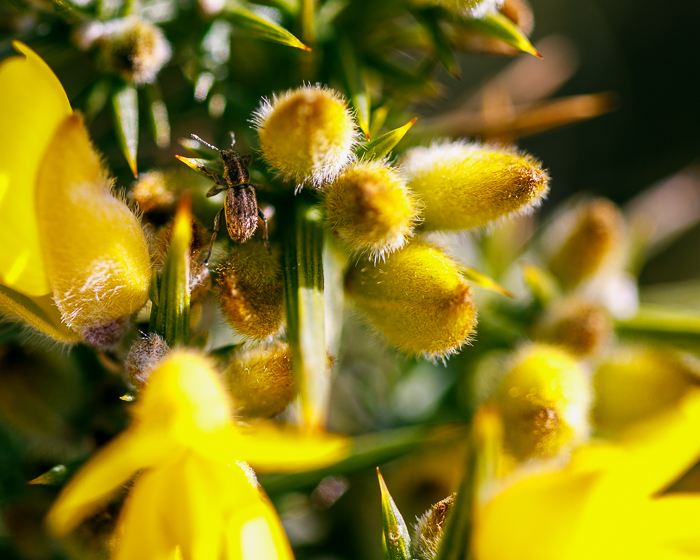
At the same time, I have been working on the Coul Links project by taking baseline photos from the air and the fixed locations.  I have added locations in order to provide a more complete view of the future development activities which appear to be headed toward approval.  It is quite interesting to note how dramatically different the land looks in the two months since I arrived back in Scotland.  What was one of the wettest (and snowiest) winters in many years had inundated much of the site with water and the ephemeral dunes slacks were extensive.  However, six weeks of unusually dry weather has caused nearly all of the dunes slacks to dry up and the land has turned from brown to green with bright clumps of yellow gorse and broom mixed in among the stands of heath on the dunes and adjacent pasture land.

I am using repeat photography techniques as described in Repeat Photography (Webb, 2010) plus the addition of aerial photography also using repeatable fixed locations, to record naturally occurring changes associated with seasonal rhythms and as a comparative baseline in preparation for recording and evaluating the manmade changes that are occur on the site.

The feedback from the week’s webinar was somewhat confusing and, given the unfamiliarity of the commentators on the nature and scale of my project, need to be taken with a grain of salt.  It is very early stages and there is not a lot of comparative data that can be shown with the 3 prescribed photographs.  I attempted to show the three categories of photographs I am taking, aerial, fixed terrestrial location, and species collection and was criticized on everything from “Why are you taking photos of insects” to “The sky is oversaturated in the drone photo” to “The shadows should be more prominent to articulate my visual language that the development is a bad thing.”  I will pay attention to the visual language as I progress and begin to edit and curate final products in accordance with the story as it reveals itself over time.  I refuse to enter the project with an a priori judgement of the consequences of the development and prefer to be as much as possible a neutral observer documenting the changes over time.  There are questions to be answered that can only be answered by carefully observing and assessing over a period of months and years.

Liz Wells writes in her book Land Matters (Wells, 2011) “Landscape is a social product; particular landscapes tell us something about cultural histories and attitudes.  Landscape results from human intervention to shape or transform natural phenomena, of which we are simultaneously a part.  A basic useful definition of landscape thus would be vistas encompassing both nature and the changes that humans have effected on the natural world. But in considering human agency in relation to land and landscape we also need to bear in mind that, biologically we are integral within the ecosystem”.  “Suffice it to note that our relation to the environment in which we find ourselves, and of which we form a part, is multiply constituted: the real, perceptions of the real, the imaginary, the symbolic, memory and experience, form a complex tapestry at the heart of our response to our environment, and, by extension, to landscape imagery”.

My plan, and hope, is to impartially observe and document the “landscaping” of this particular environment and to both parse and weave the multiple constituents described above into a meaningful set of imagery.


WEBB, R., BOYER, D. and TURNER, R., 2010. Repeat Photography: Methods and Applications in the Natural Sciences. Washington, DC: Island Press.

WELLS, L., 2011. Land matters: landscape photography, culture and identity. London ; New York: I.B. Tauris.

19 Sutherland Bridges: A nod to Ed Ruscha

As an optional project prior to beginning the Surfaces and Strategies module we were invited to examine the works of Ed Ruscha and create a project inspired by his body of work.  I chose Ruscha’s  26 Gas Stations as my inspiration and while Ruscha stated neither his photography or his subject matter were very interesting, this work, considered the first artist’s book (Drucker, 2004), had a profound influence on the future of photographic presentation.  So while I maintained Ruscha’s minimalist approach to my book, I wanted my photographs and subject matter to be interesting.  Whether I have succeeded or not is a matter for the reader to decide.

There are other comparisons that can be made between 26 Gas Stations and 19 Sutherland Bridges.  In Ruscha’s case the photographs would have been familiar to anyone who traveled Route 66 in the late 1950s and early 1960s and might have inspired a sense of nostalgia or even a bit of “hey, I have been there” sort of pride at seeing familiar places in a book.  For residents and some visitors to the Highlands of Scotland many of the bridges I have chosen are iconic in their own way and are thoroughfares on which many have passed in their day to day or holiday travels.  At the same time they are photographed from a viewpoint that may not be familiar to those only travelling over the bridges and so may reveal something new to a location that is otherwise so familiar.  Like Ruscha, there is a single photograph that spans two pages; his the Union gas station in Needles, California and mine the Dornoch Firth Bridge, the longest in Sutherland. Like Ruscha, my work is absent people in the photographs and contains only names and locations in the captions.

I have sent the book off to be printed and it has yet to arrive.  Below is the link to the PDF version of the book.  It is best viewed in the 2 page view in Adobe Acrobat or Reader so when viewing it on the web page, realize the photos are meant to be on the left hand page and the captions on the right after the first photo inside which spans 2 pages as it will display as individual pages after the front and rear cover.  It takes a wee while to load so please be patient.

19 Sutherland Bridges


References:

The Century of Artist’s Books, Drucker, Granary, 2004 p11

Some final reflections on Positions and Practice and the reactions of classmates to marks and the future

I have to say that photography, while it has technical aspects which can be evaluated relatively objectively, is in the end an artistic endeavour and as such is subject to people liking or not liking your art, but they really have no right to judge whether it is correct as an artistic work. Yes this course is supposed to push and challenge us to explore beyond the current bounds of our comfort zones and we should venture forth into uncharted territories if only to discover those are not places we would like to work in the future.

Those of you who are more established professionals are in something of a more difficult situation it seems to me, because you have in part made a statement as to who you are and what your practice is about and it represents your current livelihood. If that is working for you I don’t think you should be changing on the basis of the first modules grades or comments. I do think what has been evaluated is worth considering how it relates to your current practice and whether there may be things that could enhance that practice. I think the MA is an opportunity to explore different directions and alternate perspectives as a way of confirming past decisions about your current practice or informing paths to expand, enhance or redirect your practice. For those of us with a cleaner slate and no reliance on current practice for income, it is wee bit easier I think because we only have the future to concern ourselves with for the most part.

I firmly believe what we get out of this course is in our hands. The coursework is only the barest minimum of what is required to earn the degree. Everything else you put in and take away is entirely up to you and should be directed at satisfying what you hope to achieve from the course. Except for certain genres of photography where the briefs are completely restrictive, we otherwise have the latitude to do whatever we please and create something with which we are satisfied. If others happen to like it, it is a bonus and if then they want to buy it, jackpot. But I doubt most of you are doing this to just hit the jackpot and suspect that if you produced something that was commercially a success but in your mind a poor piece of work that did not express you as an artist, you wouldn’t be very satisfied. So I have to believe if this is a credible program the tutors ultimately want each of us to be certain who we are as practitioners and confident about what we do. In these early stages they will poke and prod, challenge our assumptions, make us doubt ourselves as steps on the road to self discovery and establishment of certainty in our own minds of who we are and what we want to do. So explore, test your boundaries, but when you know yourself and are 100% committed, stand up and fight for those convictions as artists.

Repeat Photography vs. Rephotography

Gobbledygook?  Splitting hairs?  Who cares?  There is no consensus on the definition of these terms and in fact in the literature, they are often conflated and somewhat understandably so since the two are closely related in technique and overall purpose, and any distinction between the two one might choose to make could certainly be argued for or against.  It would probably make a good topic for a debating society.

In the book Repeat Photography (Webb 2010), Chapter 1, Webb, Turner and Boyd write “Repeat photography is an excellent technique for evaluating landscape change over time, as amply demonstrated by the holdings of the Desert Laboratory Repeat Photography Collection and those of numerous other researchers. First used in the late 1800s by glaciologists as a simple method to monitor glaciers, repeat photography experienced an upswing swing in use, largely by American scientists and mostly after World War II. In recent years, repeat photography has become well established globally as a technique to address a vast array of research questions, such as fire effects and recovery, land-use effects, changes in archaeological features, the location of historic routes and trails, and assessing perceptionsof change. It is also commonly used to do regionwide assessments of landscape change, typically with respect to general or specific land-use practices and climatic fluctuations. While photographic technology has evolved and become more accessible, the fundamental techniques of repeat photography have remained unchanged since its inception in the late nineteenth century. The increasing number, variety, and locations of repeat photography projects are directly attributable to the creative minds and needs for documenting landscape changes of those who practice this technique.”

Robert H. Webb. Repeat Photography: Methods and Applications in the Natural Sciences (Kindle Locations 283-290). Kindle Edition

In Chapter 19, Photography and Rephotography in the Cairngorms, Scotland, UK, Robert Moore states, “Comparison between vintage images and contemporary rephotographs provides powerful evidence of change to landscape and lifestyle. The process of rephotographing a location also offers an opportunity to collect additional information and knowledge edge about the area depicted (Klett, chapter 4).”

“The study is ongoing and seeks to record documented  change using rephotography.  Its purpose is largely educational and interpretive, with the rephotographic technique being used as a tool to reveal change, foster a connection and understanding of the landscape, make links with human involvement in the processes of change, and inform-perhaps guide-future management practices. By definition, rephotographers are drawn to locations and make photographic compositions determined up to around 150 years previously. Usually, the initial images were taken by another photographer, but in some notable long-term studies (Webb et al., chapter 1; McClaran et al., chapter 12) a single photographer or group of photographers may have returned to a location many times, over many years.”

“During the twentieth century, a number of individual photographers made significant landscape studies in the Cairngorms, among them Seton Gordon don (Gordon 1912, 1921, 1925), Robert Adam, Walter Poucher (Poucher 1947), and John Markham (in Fraser Darling 1947, Pearsall 1950). Of these, Robert Moyes Adam (1885-1967) is perhaps the most significant exponent; he is remembered for his prolific Scottish landscape work and his documentation of rural life, much of which changed dramatically or even disappeared completely within his lifetime (Rohde, chapter 18). In a 1958 interview, he revealed something of his motivation: “Suppose I catalogued (Scotland’s) wildlife and its topography as a permanent record against industrial and other changes of the future. Suppose I were to preserve for my own botanical interest, the land as I see it in my lifetime” (Bruce-Watt 1958 quoted in Smart 1996). Adam’s collection of negatives-some 15,000-were made from the late 1890s to the 1950s. They form a major documentary resource that has been featured in many book publications and magazines and is now archived in the University of St. Andrews Library.”

“By faithfully replicating a view, it is possible to begin gin to make sense of the landscape change, particularly in terms of human intervention and influence. Rephotography allows the two dimensions of the original image to be interrogated and compared on like terms with a contemporary counterpart.”


Robert H. Webb. Repeat Photography: Methods and Applications in the Natural Sciences (Kindle Locations 4886-4893; 4906-4912; 4919-4921). Kindle Edition.

One can see even here among the leading experts in the field of repeat photography and rephotography, there conflation and confusion in the use of the terms.  Is it important to make a distinction?  Again a point which could be argued, but for the purposes of my project, I believe the answer is yes.  

As noted above, rephotography usually begins with a historical photograph taken by someone else.  The technique requires research to locate the original vantage point and composition, and determine the time of year and day in order to replicate as closely as possible the original image.  So a rephotography project begins with a certain number of unknowns which must be resolved in order to capture a contemporaneous image that replicates faithfully enough the original image so that they can be meaningfully compared.

While some repeat photography projects begin with an old photograph taken by someone else, it is more common that an individual or team identify locations with perspectives chosen for their scientific relevance to the subject being studied and those sites are revisited and photographed on some periodic basis.  The subtle distinction being there is not the element of the unknown in repeat photography.  Both are meant to provide a basis for meaningful evaluation of changes to subject area, and the techniques for imaging are largely the same, but the starting point is different.

So in keeping with this interpretation, and for the purposes of my project, the Repeat Photography elements will be those for which I choose locations and make the original  and subsequent images that will be used for analysis of physical and ephemeral changes to the landscape of Coul Links.  If I am able to find any historical photographs of the landscape or cultural features on Coul Links, they will used as the basis for the Rephotography elements of my project.


Week 11 – Reflections on Proposals

Much of the week was spent finalizing the Research Proposal and the Work In Process Portfolio.  In the time since the submission of the Oral Presentation, I have been able to spend time on the site doing surveys, verify fixed site locations, run aerial photo mission profiles and begin imaging of flora, fauna and cultural features on the Coul Links site.  Further research and reading has helped to provide more insight into how to do what I plan to do and has revealed that while the project will bear similarities in techniques applied by others in the past, it will also be unique in its scope and its integration of several photographic approaches.

It was interesting (as well as sometimes confusing) to find no clear definitions, and in fact often conflation, of terms like repeat photography and rephotography.  In the end, photography is a creative process and how I choose to adapt various methodologies and techniques to reach a desired outcome is completely independent of what anyone before me has done or how they have chosen to define a particular approach.  I will discuss more in a separate blog post how I have chosen to distinguish between repeat photography and rephotography.

My research project is principally a natural science technique based project that may require some adaptation due to the compressed timeframe in the MA and may result in a slightly non-traditional result compared to a purely scientific approach to a repeat photography project.  To my mind this is perfectly acceptable as long as I am able to convey the story I am attempting to tell about this place over a period of time.

A large part of my time in my nearly 20 years in the aerospace industry and even more in 15 years of consulting work involved working on major proposals.  Most were large scale, complex and high value projects ranging from $100 million to $1 billion plus.  The U.S. Government is generally very prescriptive in the Requests for Proposal on content requirements, page counts, fonts and formats.  Within those constraints it is up to the proposers to determine how best to tell their stories and sell their solutions.  The consultancy for which I first worked was at the time considered the best in the business and had developed a proposal process that had been instrumental in winning nearly every billion dollar program defense and space program in the prior 20 years.  The process was disciplined and iterative one that began broadly and with each iteration increased the level of detail.

Creative work proposals may be generally less prescriptive in form, but nonetheless need to serve the same function as a billion dollar proposal.  One needs to understand the question or problem the client wishes to answer/solve and develop a strategy for creating a solution. What themes will be necessary to convey that story and then what detailed information can be provided to substantiate the proposers credibility and capability to perform.  In the case such as the MA Project proposals, we are not responding to a client brief per se as would be the case in future when trying to embark upon creative personal work.  In this case the principles described above still apply except that one needs to convince someone to buy what we are selling even though they may not have realized they want it.  We often used a series of 7 words beginning with the letter C to convey the essential elements of any proposal; Correct, Compliant (with requirements), Credible, Concise, Coherent, Consistent, and Compelling.  Capture those attributes well and one is likely to have a winning proposal.

Week 10 – Communicating my Practice

With my eye, and by extension through my camera, I seek to discover the nature of things; to, as Sontag writes, reveal hidden realities; and to, as Berger wrote of Impressionist painters, see the visible in continuous change.  I see what others do not, because I look in places and ways others do not.  Light, colour, patterns, textures and dynamic moments of things in nature and of nature are my principal subjects, though things man-made can occasionally capture my attention.

I am driven by wonder and curiosity.  I use my camera to help me discover, and perhaps reveal to others, the what, where, when, how, why of the world around me.

untitled-4544

Week 10 – Theory in Practice Forum

As part of our course work this week we were asked to find an example of effective theory in practice and discuss why we thought it an effective piece of communication.  I cited an example from the book Repeat Photography.

From the Preface to Repeat Photography, Webb, Boyer and Turner (2010)

“Repeat photography is nearly as old as photography itself, with broad scientific, cultural and historical applications.  In a rapidly changing world, this technique graphically shows how landscapes respond to a variety of natural and anthropogenic processes.  As a scientific tool, repeat photography is unique in that it can be used to both generate and test hypotheses regarding ecological and landscape changes, sometimes with the same set of images.  From a cultural perspective, it provides a time capsule showing how towns, favorite places, archaeological sites, historic buildings, and even people have changed.  Rephotography has long been used medically to monitor a variety of conditions, ranging from tuberculosis to retinal deterioration.  Aquatic natural and cultural features are now monitored with underwater repeat photography.”

This opening segment to the book succinctly communicates the overall concept of repeat photography without delving into any specific detail about the technique.  It also clearly articulates the utility and broad range of applicability of repeat photography.  It does both in both instances without resorting to overly academic or esoteric language making it accessible to virtually anyone.  While this book is targeted toward an audience of scientists who would apply the techniques of repeat photography to their specific disciplines, this foreword in a few sentences explains the concept such that a non-scientist or non-photographer can appreciate.

That in my mind makes this passage an effective piece of communication.

WEBB, R., BOYER, D. and TURNER, R., 2010. Repeat Photography; Methods and Applications in the Natural Sciences. Washington, DC: Island Press.

Week 9 – Critical Perspectives in My Practice

As each week passes I find myself peeling back yet another layer of the onion that is my photography practice, and in doing so am beginning to understand more clearly what motivates me to photograph what I do and why in the way I do.  I have been asked to think about things I have never given thought to and frankly never cared about.  I am not certain all this introspection will result in my being a better photographer, but it may result in a better connection with viewers of my work, which also heretofore has never been much of a concern.

Much of the course for me thus far has been involved the development of a new vocabulary and framework that has is allowing me to better articulate aspects of my practice and its motivations, and to engage in discussions about the work of others.

My photographic practice is principally ontological and based in naturalism.  I am discovering that my photographic practice is motivated and informed much as the rest of my day to day existence.

General Systems Theory developed by Ludwig von Bertalanffy and which derived in part from the work of Kant and Hegel has been an underlying foundation to much of my professional life and personal philosophy.  These theories also resonate with me in the critical examination of photographic work as much or more than some of the others to which we have been exposed in this course.  There is no single way to view anything and my background in applying systems theory to my world view informs my examination of  photography.  The widely accepted thoughts of Barthes, Sontag and others have bits of wisdom in their thinking and utility in their approach, but they are not by themselves universal in application.  Admittedly this is all new and my thoughts are far from fully formed, and it is entirely possible that I have missed something in the current accepted practice of critical review that will become illuminated over time.

I think a photograph can be considered an organism in Kantian, Hegelian and Bertalanffian terms.  It is what the author created only at the moment it is viewed by the author for the first time.  Notice I did not say at the time the image was captured, because we all have been surprised at times by how different what we thought we were capturing actually turned out to be when we first see it on the screen or in the print.  It is only then, when the author make the final creative decision on the form the photograph is to take, that is has the pure intention of the photographer.  From that point on, the photograph is alive and it is ever changing.  While the form remains constant, the interpretation of the content, the emotion evoked, the knowledge imparted, the entelechy of that image is different every time another set of eyes is put to it.  Even the  author may find in returning to an old image that it conveys a different meaning or emotion than was originally intended.

In some ways it is not that different than the way Roland Barthes describes the way we look at photographs in particular: “that whatever they grant to vision and whatever their manner, a photograph is always invisible. It is not it that we see.”  He discusses that the original image by the photographer is in Eden, and as soon as it enters the public domain of circulation it is becomes culturally coded and it undergoes a transformation where the viewer will read and / or respond to an image, and this may change its original meaning.
Rudolf Stichweh, in his journal article on Systems Theory discussed the work of several theorists and the relationships between their respective work.  I think their are elements which are relevant to the critical analysis of photographs.  Among the topics discussed were Niklas Luhmann’s (1927-1998) writings.  “Systems for Luhmann are systems consisting from communications, and as such they are based on a way of processing informations which Luhmann calls meaning.  Meaning is formally similar to information as it is based on something being a selection among plural alternatives. But what is characteristic of meaning and thereby constitutive for social and psychic systems, as the two types of systems making use of meaning, is that the alternatives not chosen are still remembered. One can come back to them, one can criticize selections in pointing to the alternatives which were available, one can write history on the basis of this dual structure of meaning.”  The last section above seems to offer a practical way to approach critical analysis and accounts for the likelihood of plurality in interpretation of a photograph as well as a system for using that plurality to further analyze and critique the work.

Hodgson’s discussion about whether something matters and whether photography is at risk of being trivial is an interesting one.  Everything matters to someone and nothing matters to everyone.  Somewhat cynically, I would argue that everything is trivial except to those who it is not.  It is matter of scale.   Art, literature and music are incredibly important to civilization as a form of creative expression and a record of our societal evolution. I would find it difficult to live without music and books others create, or without means to express my creativity purely for the joy of creating.  That said though, I think virtually every individual piece of art, literature or music is trivial.  It is an extremely rare piece of art, literature or music that has the power to exert significant influence over anything.

Photography as a whole exerts a great deal of influence on modern society.   In the last 100 or so years the world has transformed from consumers of the written word to consumers of visual communications.  We are inundated with photographs.  Again I would assert that most of them are indeed trivial as individual pieces of work, and perhaps even universally in certain genres of photography.  With the number of people in the world and the number of cameras, it is increasingly difficult to even create an image that “matters” on a broad scale.  As I stated earlier, every photo will matter to someone.  However, I would also assert photography, because it can be so contemporaneous along with the current ability to disseminate an image around the world in near real time, has the unique potential to “matter” and be non-trivial as an individual image than any other form of visual communication.


Arnold, D. (2011). Hegel and ecologically oriented system theory. Journal of Philosophy, 7(16), 53-0_3. Retrieved from http://ezproxy.falmouth.ac.uk/docview/1170929513?accountid=15894

LUHMANN, N., 1995. Social Systems. Stanford, Cal.: Stanford U.P. Stanford, Cal.: Stanford U.P.

Stichweh, R.Systems Theory. https://www.fiw.uni-bonn.de/demokratieforschung/personen/stichweh/pdfs/80_stw_systems-theory-international-encyclopedia-of-political-science_2.pdf