Week 10 – Communicating my Practice

With my eye, and by extension through my camera, I seek to discover the nature of things; to, as Sontag writes, reveal hidden realities; and to, as Berger wrote of Impressionist painters, see the visible in continuous change.  I see what others do not, because I look in places and ways others do not.  Light, colour, patterns, textures and dynamic moments of things in nature and of nature are my principal subjects, though things man-made can occasionally capture my attention.

I am driven by wonder and curiosity.  I use my camera to help me discover, and perhaps reveal to others, the what, where, when, how, why of the world around me.

untitled-4544

Week 9 – Critical Perspectives in My Practice

As each week passes I find myself peeling back yet another layer of the onion that is my photography practice, and in doing so am beginning to understand more clearly what motivates me to photograph what I do and why in the way I do.  I have been asked to think about things I have never given thought to and frankly never cared about.  I am not certain all this introspection will result in my being a better photographer, but it may result in a better connection with viewers of my work, which also heretofore has never been much of a concern.

Much of the course for me thus far has been involved the development of a new vocabulary and framework that has is allowing me to better articulate aspects of my practice and its motivations, and to engage in discussions about the work of others.

My photographic practice is principally ontological and based in naturalism.  I am discovering that my photographic practice is motivated and informed much as the rest of my day to day existence.

General Systems Theory developed by Ludwig von Bertalanffy and which derived in part from the work of Kant and Hegel has been an underlying foundation to much of my professional life and personal philosophy.  These theories also resonate with me in the critical examination of photographic work as much or more than some of the others to which we have been exposed in this course.  There is no single way to view anything and my background in applying systems theory to my world view informs my examination of  photography.  The widely accepted thoughts of Barthes, Sontag and others have bits of wisdom in their thinking and utility in their approach, but they are not by themselves universal in application.  Admittedly this is all new and my thoughts are far from fully formed, and it is entirely possible that I have missed something in the current accepted practice of critical review that will become illuminated over time.

I think a photograph can be considered an organism in Kantian, Hegelian and Bertalanffian terms.  It is what the author created only at the moment it is viewed by the author for the first time.  Notice I did not say at the time the image was captured, because we all have been surprised at times by how different what we thought we were capturing actually turned out to be when we first see it on the screen or in the print.  It is only then, when the author make the final creative decision on the form the photograph is to take, that is has the pure intention of the photographer.  From that point on, the photograph is alive and it is ever changing.  While the form remains constant, the interpretation of the content, the emotion evoked, the knowledge imparted, the entelechy of that image is different every time another set of eyes is put to it.  Even the  author may find in returning to an old image that it conveys a different meaning or emotion than was originally intended.

In some ways it is not that different than the way Roland Barthes describes the way we look at photographs in particular: “that whatever they grant to vision and whatever their manner, a photograph is always invisible. It is not it that we see.”  He discusses that the original image by the photographer is in Eden, and as soon as it enters the public domain of circulation it is becomes culturally coded and it undergoes a transformation where the viewer will read and / or respond to an image, and this may change its original meaning.
Rudolf Stichweh, in his journal article on Systems Theory discussed the work of several theorists and the relationships between their respective work.  I think their are elements which are relevant to the critical analysis of photographs.  Among the topics discussed were Niklas Luhmann’s (1927-1998) writings.  “Systems for Luhmann are systems consisting from communications, and as such they are based on a way of processing informations which Luhmann calls meaning.  Meaning is formally similar to information as it is based on something being a selection among plural alternatives. But what is characteristic of meaning and thereby constitutive for social and psychic systems, as the two types of systems making use of meaning, is that the alternatives not chosen are still remembered. One can come back to them, one can criticize selections in pointing to the alternatives which were available, one can write history on the basis of this dual structure of meaning.”  The last section above seems to offer a practical way to approach critical analysis and accounts for the likelihood of plurality in interpretation of a photograph as well as a system for using that plurality to further analyze and critique the work.

Hodgson’s discussion about whether something matters and whether photography is at risk of being trivial is an interesting one.  Everything matters to someone and nothing matters to everyone.  Somewhat cynically, I would argue that everything is trivial except to those who it is not.  It is matter of scale.   Art, literature and music are incredibly important to civilization as a form of creative expression and a record of our societal evolution. I would find it difficult to live without music and books others create, or without means to express my creativity purely for the joy of creating.  That said though, I think virtually every individual piece of art, literature or music is trivial.  It is an extremely rare piece of art, literature or music that has the power to exert significant influence over anything.

Photography as a whole exerts a great deal of influence on modern society.   In the last 100 or so years the world has transformed from consumers of the written word to consumers of visual communications.  We are inundated with photographs.  Again I would assert that most of them are indeed trivial as individual pieces of work, and perhaps even universally in certain genres of photography.  With the number of people in the world and the number of cameras, it is increasingly difficult to even create an image that “matters” on a broad scale.  As I stated earlier, every photo will matter to someone.  However, I would also assert photography, because it can be so contemporaneous along with the current ability to disseminate an image around the world in near real time, has the unique potential to “matter” and be non-trivial as an individual image than any other form of visual communication.


Arnold, D. (2011). Hegel and ecologically oriented system theory. Journal of Philosophy, 7(16), 53-0_3. Retrieved from http://ezproxy.falmouth.ac.uk/docview/1170929513?accountid=15894

LUHMANN, N., 1995. Social Systems. Stanford, Cal.: Stanford U.P. Stanford, Cal.: Stanford U.P.

Stichweh, R.Systems Theory. https://www.fiw.uni-bonn.de/demokratieforschung/personen/stichweh/pdfs/80_stw_systems-theory-international-encyclopedia-of-political-science_2.pdf

Week 8 – Reflections

This week’s material was principally to do with the effects context had on the interpretations, and perceptions of the significance, of a photograph.   Where and in what form a photograph is published, and who is viewing it can affect its meaning dramatically.  Even the same photograph published in different contexts can convey entirely different meanings as in the example of the spectrum of meaning attributable to the wedding photograph described in the Walker article in this week’s readings.

In the Liz Wells book, Photography, A Critical Introduction, she references Sontag’s view that “referential nature of the photographic image both in terms of its iconic properties and indexical nature…testifies to the actuality of how something, someone or somewhere once appeared.”  While in response, Kozloff argues “for a view of the photograph as a ‘witness’ with all the possibilities of misunderstanding, partial information or false testament that the term ‘witness’ may be taken to imply.”  Further Kozloff states “The presence of the photograph reveals how circumscribed we are in the throes of sensing.  We perceive and interpret the world through a set of incredibly fine internal receptors.  But we are incapable, by ourselves, of grasping or tweezing out any permanent, sharable figment of it.”  Wells a few pages later refers to Roland Barthes conclusion “that it is reference, rather than art or communication, which is fundamental to photography.” To Barthes, “The photograph is always about looking, and seeing.”

So how does this inform the discussion of context?  I think the perceptions of the meaning of a photograph can be influenced by where it is seen and how it is presented, but in the end, absent any semiotic clues as to it purpose, the resulting interpretation is utterly and entirely up to the viewer.  With all the fallibilities of witnesses, those interpretations are subject being very superficial, or of reading much more into the image the author intended, or to being so influenced by the life experiences, political motivations, likes, fears, etc. as to result in a complete misunderstanding of the author’s intent.  And indeed, it most probable the person standing next in the queue will come away with other than an identical conclusion than that of the first viewer.

How much control over context and meaning do we as photographers really have?  To what extent can we control a narrative with our work?  Is it even possible with a photograph alone, or are words always necessary?

I am inclined to believe the answers to the first two questions are relatively little and the third, that words are necessary.

The task for the week was to begin constructing our Work in Process portfolio website galleries.  We were to explore various platforms to evaluate their attributes.  I built galleries on my existing photography website hosted on my owned domain and a second one in this WordPress CRJ.  I also began experimenting with Exposure, SquareSpace, and took a stab at building a website from the beginning using Adobe Muse.  I looked too at Adobe Portfolio, but quickly determined the coding requirements were beyond my skill level and frankly outside my level of interest.  On the other hand, none of the other sites were perfect.  Each had advantages and disadvantages either in the way photos could be displayed, to the ease of adding text, to variety and flexibility in themes and the ability to customize.  Some were more intuitive than others.

I have yet to conclude which solution suits me best and intend to experiment some more over the coming weeks as time permits.  I will likely make my 4 May submission using Exposure.

The peer and tutor reviews of the portfolio were interesting and I initially found a few of the comments quite puzzling with respect to my practice.  Upon reflection though, it occurred to me the comments were in part a reflection of the their practice.  For example, one comment had to do with the fact that it looked as though I was cropping significantly and that the resulting different sizes of photos was detracting from the aesthetic of my page.    I also realized it came from someone who primarily works in film and does portraiture where the distance to the subject and the composition are easily controlled.  I on the other hand am photographing much smaller subjects, often moving and at great distances meaning I have much less control over composition in the camera and have to make adjustments in post processing.  As I thought about the comment I could see how it impacted the web presentation, and that being said, I began to try setting my crop sizes to a more standard aspect ratio to see what impact it might have of the results and what compromises it would require.  There is little impact to the landscape and environmental portraits in general, but there may be some in the tight portraits of birds in particular due to their size and distance from the lens.


WALKER, J.A., 1997.  The Camerawork essays: context and meaning in photography In: J. EVANS, ed, London: Rivers Oram, pp. 52-63.

WELLS, L., 2015. Photography: a critical introduction. Fifth edn. London ; New York: Routledge, Taylor & Francis Group.


Week 6 – Reflections

This week’s work was focused on the preparation and presentation to the tutors of our oral presentations.  I took the time to look at the exemplars that were posted and found them diverse and revelatory.  There were things I liked and disliked about each, but all displayed impressive depth and critical analyses of their influences, motivations and inspiration.  These are things I have not given enough thought before.

In the tutor review I got some very valuable feedback on the presentation content and the project which allowed me to think about the project in a different and more sustainable way.  It pointed out deficiencies in the depth of my research that I need to rectify.  I have been so focused on trying to decide what I wanted to do and how I might go about it that I hadn’t focused enough on critical analyses and research.

After the review I had a better frame of reference to re-examine and understand the exemplar presentations which helped a great deal in preparing the next draft of my oral presentation.  I have been struggling a bit with technology trying to find a platform to make the presentation come to life as I envision it.  I believe the content is now nearly nailed and the project Coul Links in much clearer in my mind and in the presentation.  A couple more tweaks on the presentation platform to improve the polish and I will be there.

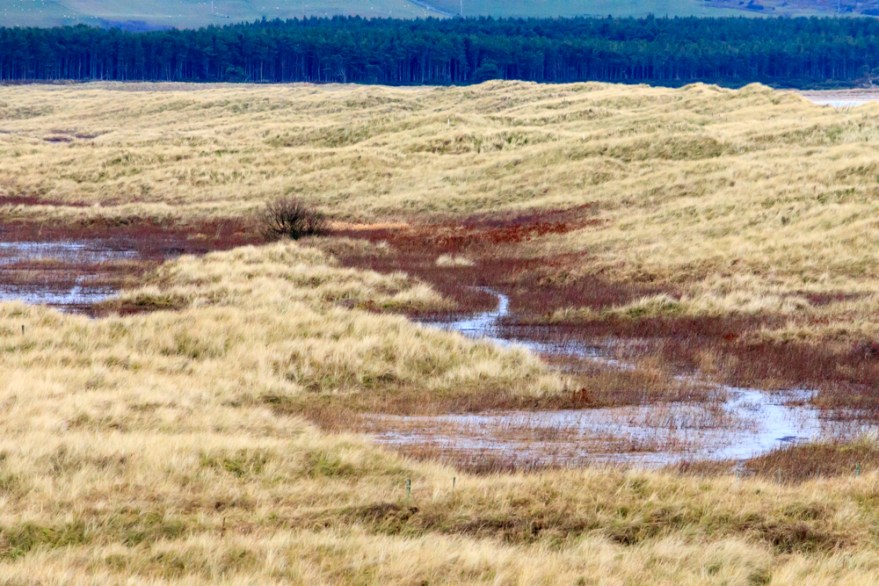
Coul Links Small-0613

Coul Links Dunes and Dune Slacks (Dec 2017)

Week 5 – Reflections

This was an full and interesting week with the coursework on ethics and the formulation of my oral presentation.  I hesitated to review the exemplar presentations until after I had completed my first draft, and when I finally did, I realized I had a way to go both in terms of polishing the presentation and more importantly in terms of truly contextualizing the project and giving it a critical basis.  The peer reviews were quite favourable on the topic I chosen, and not nearly critical enough on the depth of the content or the way it was presented.  But it was a good start and only the point of departure for further refinement.

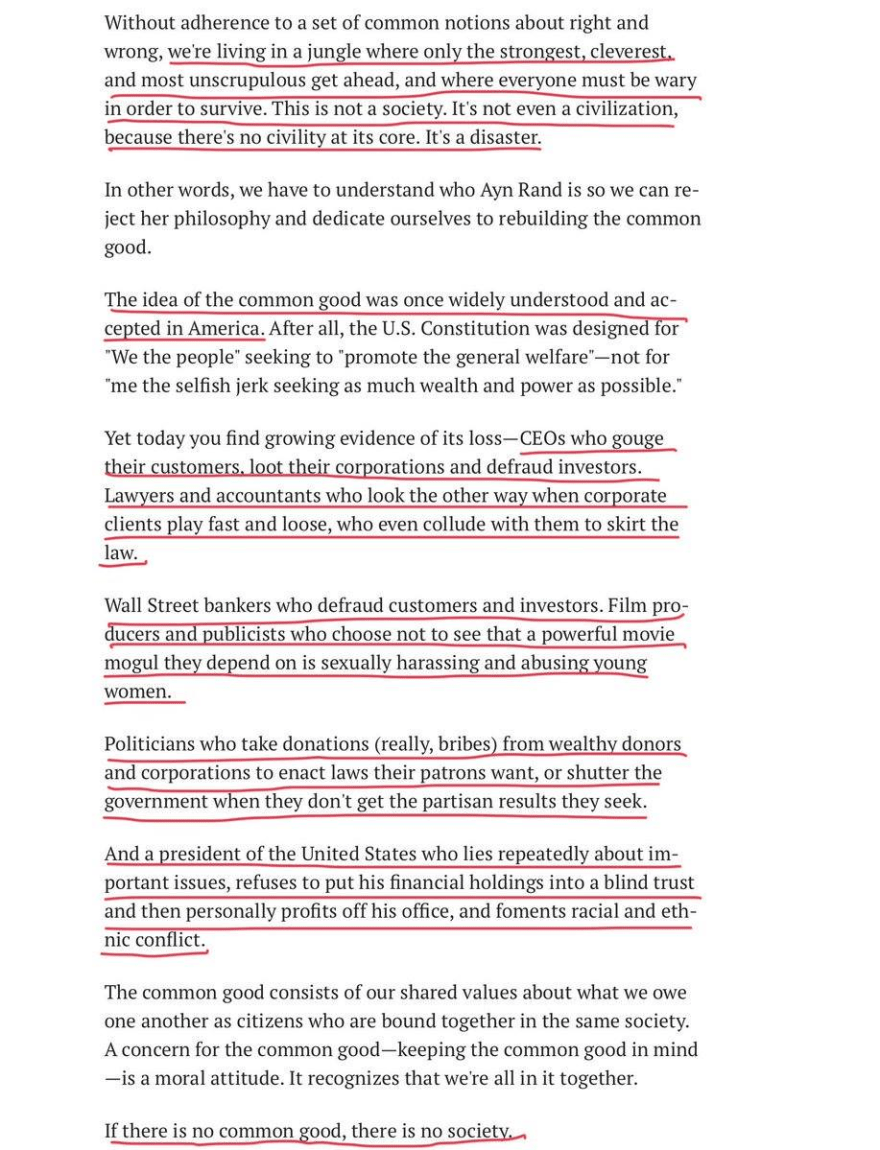
On the topic of ethics, in saw a Facebook post from Robert Reich, former US Secretary of Labor and Chancellor of the School of Public Policy at University of California, Berkley.  He has a book about to be released on the loss of common good.  Below is an excerpt from that book that he posted on Facebook.  While his intention was not directed at photographers, but I think there is relevance to photographers nonetheless as it speaks to ethics.  It postulates the seemingly increasing ethical lapses across business, politics and personal behaviour are due in no small measure to an erosion of the concept of common good.

28618860_1884943898184864_5922952484869177849_o

As photographers, we operate within societies in which moral attitudes and boundaries of propriety have changed to the point of where it is often not clear whether civility has disappeared completely.  I am not naïve enough to suggest that the genie can be put back in the bottle, but we as photographers have choices to make every day in who or what we photograph and how; where we choose to publish and how we want our work to be used.  And we have the choice to use our art to attempt to elevate or to contribute to the decline of societal values.

Week 4 – Evolving

The Face to Face workshops, Symposium, Portfolio Reviews and this week’s collaborative projects have provided more interaction with other photographers than I have ever had before. The talent was extraordinary and caused me at moments to wonder if I belonged among this company and course.  I was astonished by the varying perspectives photographers took in how they approached the same subject, and I was even more surprised at how varied the feedback was on my portfolio of work.  I have to say the emphasis I put in on bird photography was beginning to leave me feeling a bit boxed in  and I am thankful to Paul Clements who, in an informal review in which I also showed him some of my other work, told me to go in what ever direction I wanted and just because my admissions portfolio was wildlife and natural history based it didn’t mean that was what I had to do.  Quite liberating that; and it opened my mind to some other possibilities.

Collaborations during the workshops and this week in the exercises showed again varying perspectives can contribute to an outcome.  But as I got to thinking about photography and the stereotype of it being a solitary experience I began to realize it is never a solitary experience.

“Photography is conventionally understood as a practice engaged in by solo, even solitary, operators. True enough, typically only one eye and finger are responsible for pressing the shutter release. However, photography encompasses much more than button pressing, and many hands are often involved in the broader photographic process of printing, editing and distributing images. The popular image of the photographer as someone working alone — from the intrepid photojournalist to the introverted artist — is therefore something of a fiction.”  (Palmer 2013)

We as photographers are always collaborating.  We collaborate with our equipment.  We collaborate with the light. We collaborate with our subjects.  We collaborate with our consumers and we collaborate with everyone else in between who might be involved with bringing our image to a consumer.  So while the notion of a lone photographer trekking off to a far away place to capture an image is romantic, it belies the degree of collaboration required to bring that image to view.

The project I am proposing to do will require a great deal of collaboration.  It will require a combination of documentary photography, landscape photography and wildlife/ natural history photography to tell the story of the Coul Links project.  It will require me to work with the team developing and constructing the project to stay attuned to their schedules and plans.  It will require some collaboration with outside groups to understand their concerns and objections to the development so that I can if possible record the actual results of the development and its impact on the SSSI site and the species that exist there.

I can sense that I am evolving, and am beginning to better understand the overall objective of this course, and to find my voice.  It finally occurred to me that that if I were doing a Masters programme in Organic Chemistry, I wouldn’t just be doing a set of elegant experiments to demonstrate reactions that were independent of each other.  I would need those experiments to relate to each other in a way that would lead me to a evidentiary conclusion; that is to prove or disprove my hypothesis.  Similarly then, a series of beautiful photographs without a story that binds them together would not answer the question being asked of me as an photographer in pursuit of an MA.


PALMER, D., 2013. A Collaborative Turn in Contemporary Photography? photographies, 6(1), pp. 117-125.


Week 3 – Re-thinking Photographers

I am not yet a professional photographer when measured by the remuneration criteria and yet I do create images that are on par with many professional nature photographers.  I think in general, compact cameras and Smartphone cameras have had little impact on my genre of photography, in particular bird photography, because of the limitations of the lenses.  On the other side of the coin, the quality of professional camera equipment has also continued to evolve and given me the opportunity to shoot high speed sequences with mind boggling quality.  I have never used filters and find the idea antithetical to the realism I am trying to capture.

The other area of discussion this week was about what/ who are photographers and professionals.  The answers lie in the definition of both those terms and the subsequent frame of reference that offers for discussion.  I expressed an opinion that the evolution of the technology and the medium perhaps warrant a different set of definitions than the classic one in the Oxford dictionary and most certainly have come to require some qualifiers or further refinement of the concept of each.  In the  end though it is impossible to draw a definitive box around either and there will always be people who blur the boundaries.  I think that is a good thing.

Week 2 – Reflections

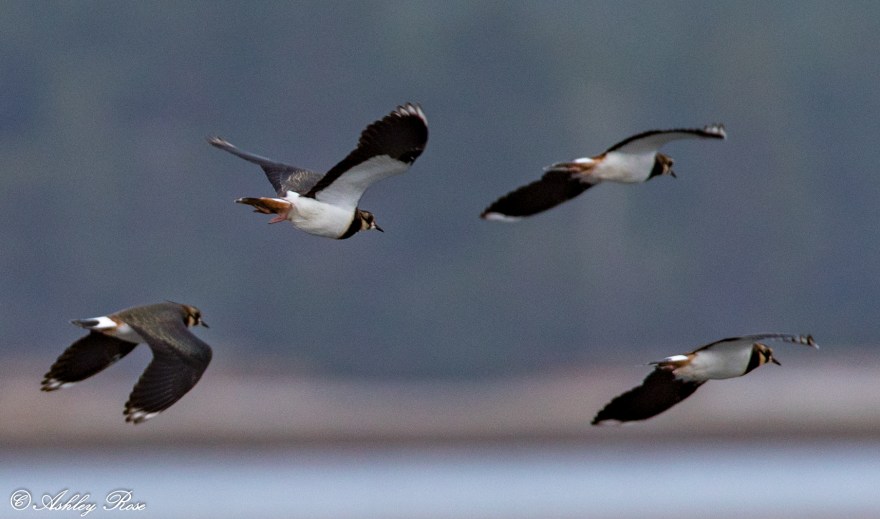
Lapwings-1049

Lapwings over Loch Fleet

Where does my work fit and who will care?  Who is and who could be my “consumer”?  One of the weeks presentations discussed Barthes (1982) concepts of “studium”, which describes that which has polite, general interest and can be assessed in primarily objective terms,  and “punctum” which is defined as the prick or wound, as the element that pierces the viewer like an arrow and can be assessed in primarily subjective terms.  I suspect it is punctum that is the difference between a good photograph and great photograph.  That is to take nothing away from a photo with great studium as they are quite likely technically and aesthetically beautiful and popular.  But it is unlikely those photos would be described as powerful or piercing as those with punctum.  A photo of a dolphin entrapped in a fishing net would likely be viewed by most as having punctum.  I think most of my photos  have significant studium, they generally lack punctum.  It seems to me that punctum derives often from images that evoke emotion.  Photos that make people feel the pain or joy, anger or despair depicted may be viewed as more powerful.   Photos with humans involved are probably easier for people to relate to than photos of animals or plants alone.  Photos of animals suffering in some way, particularly as a result of human actions, often evoke emotion, but I am not inclined to seek out those relatively rare situations.  Sometimes a photo of a species so rare or a circumstance so rarely seen as to create a sense of wonderment can carry punctum.  Not as powerful a punctum as reportage photos of a warzone’s’ impacts on people there, but punctum nonetheless.

I have yet to clearly identify my audience, though I think people in general like seeing images of the natural world that surrounds us.  How to package my images to reach an audience is perhaps the tougher question that  needs to be answered, along with the question of what would interest people in my photographs rather than the thousands upon thousands of other photographs of similar subjects?

I have the kernel of an idea that I would like to have my  photographs bring to people that which they would not normally see; photos that inspire and evoke their sense of wonderment both in terms of what they see on the image and in how it was captured.

Still some things to be worked out and it will evolve throughout the course, but is early days in the journey and it would be surprising if I had all the answers.


Reflections – Week One

It has been a revelatory week in many regards.  First, in just getting into the mechanics of how the course is structured and how the learning process will be undertaken. Second, realizing how much I enjoy the stimulation of being back in a “formal” learning environment and having a focus instead of the “Brownian motion” approach to learning my everyday life has taken for a number of years.  Third, by how impressive the talents of my fellow classmates are, and the interesting and diverse backgrounds they possess.  I am really looking forward to the next two years of learning with them and from them as we collectively make our way through the course of study.  Fourth and lastly for this post, how even this first week’s studies have prompted me to think about my practice in a very different way.  I knew coming in to the program that I felt my worked lacked context and purpose other than producing technically and aesthetically beautiful images of things I found interesting.  Finding a way to add context and more purpose was what I needed to discover both about myself and about the potential my practice holds.

When the concept of global images was introduced I found myself a bit skeptical.  I thought about it in terms of my current work and much of my past work which largely excludes people from my images and could not see much universality.  I still hold to the idea that something in addition the photograph is required to convey context and intention, and to evoke action in most all cases.  However, I was struck by the power of the images my fellow classmates produced to evoke emotion and visceral response.  All of their images included people, and I think, even though I may have come to a different conclusion about the subject or point of the image than was ultimately explained by the photographer, I reacted based on my own human experience and related to those photos through my own filters and biases.  I do not think my work generally evokes that sort of response.

There is a certain element of detachment in my work in that I shoot mostly with very long lenses, and my subject matter does not convey emotion in a human context.  My work is usually about trying to bring close things that most people cannot see.  The clarity of a catchlight in the eye of a soaring raptor,  the intricacies of the pattern and structure of the feathers of a small bird, or seeing a woodpecker extracting an insect larvae from the trunk of tree shows in a level of detail something generally not seen.  It certainly can evoke a “wow” response, and it can inform and add to the body of knowledge of individuals or society, but is that enough?  I don’t know yet.

Why do I photograph wildlife and nature?  In reflection, I suppose there are at least a couple of answers.  There is an honesty and unambiguity that is not possible in photographing people.  Because we share a human experience, albeit perhaps a quite different one, we make inferences and judgements based on our own experiences, and they may be quite far from the actual reality.  I do not think that happens in looking at nature photography.  The interpretation is generally unburdened by our own experiences and can therefore be viewed accurately as simple truth.  The second answer probably has to do with the window and mirror analogy, and I suppose I am more comfortable as a  window to the world.  Photographing people seems to reveal quite a lot about the photographer and I have lived most of my life not revealing much about myself to very many people.  It is not that I fear revealing myself, at this stage of life anyway, but more that I felt my work is not meant to be about me, but rather what I could produce.  And maybe that is the most revealing thing of all.

In closing, I will reiterate what a good week it has been and state for the record how excited I am to be on this journey.  There remains much to be discovered about me, my work, and our place in the world.

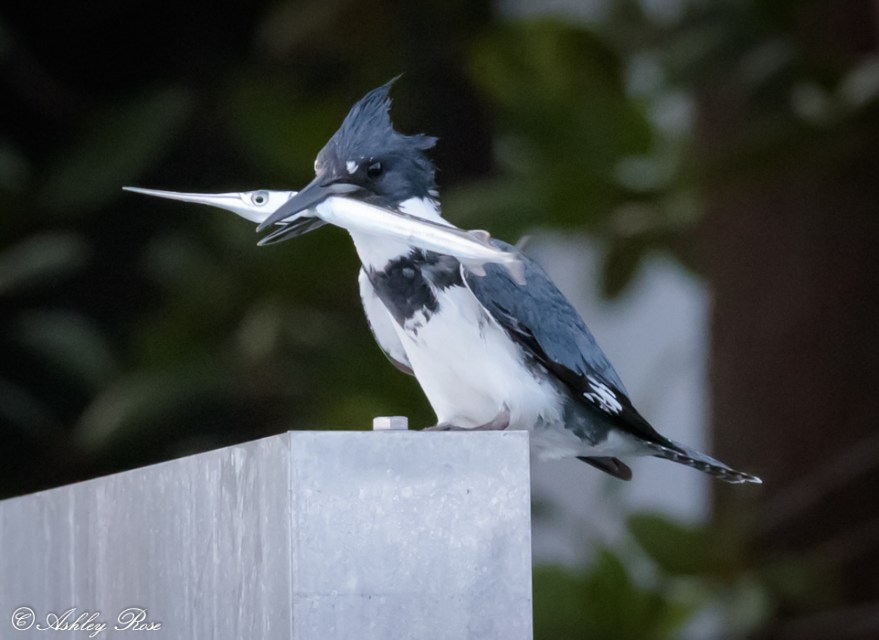
Belted Kingfisher with Needlefish -2555
Belted Kingfisher