Week 9 – Critical Theory Exercise

The photo I have chosen is one from my project work at Coul Links.  I was photographing the steading buildings when I encountered this object.

Coul Farm_31Mar18-4481.jpg

In examining this photograph from a purely indexical point of view, one would see a lug wrench in an advanced state of corrosion such that the layers of iron have begun to separate and give the impression the end of the tool is blossoming.  It is also possible to observe the tool is balanced over the top of a fence that is constructed of a wooden top rail with metal mesh below whose hexagonal shape mirrors that of the wrench.  It is a close up (macro) still life in genre.

If one were to examine the photo from a semiotic perspective and attempt to perceive “the difference between what we see in the picture and the actual reality it depicts” (Bate 2016) there is perhaps much more to be concluded from the photograph.  One might discern from the type of fence that this photo might have been taken on a farm.  The state of well weathered fence and the corroded lug wrench balanced atop it suggests the farm is no longer a going concern and has fallen into a state of disrepair and neglect.  A farmer on a running farm would be very unlikely to leave a tool in the open, abandoned for such a period as to allow that degree of corrosion to occur, and if the tool were broken it would not be left in a place such as this where an animal could run into it.  The blossoming rust at the end of the of the wrench serves as a metaphor for the disrepair and decay that is going on around it throughout the rest of the buildings and farm property.  This photo asks the question “What else is going on beyond the boundaries of this image?”  Absent other images, this photo requires us to imagine and an extrapolate from the close up view the author chose to use about what surrounds it.

BATE, D., 2016. Photography; The Key Concepts. 2nd edn. London and New York: Bloomsbury Academic.

Week 8 – Reflections

This week’s material was principally to do with the effects context had on the interpretations, and perceptions of the significance, of a photograph.   Where and in what form a photograph is published, and who is viewing it can affect its meaning dramatically.  Even the same photograph published in different contexts can convey entirely different meanings as in the example of the spectrum of meaning attributable to the wedding photograph described in the Walker article in this week’s readings.

In the Liz Wells book, Photography, A Critical Introduction, she references Sontag’s view that “referential nature of the photographic image both in terms of its iconic properties and indexical nature…testifies to the actuality of how something, someone or somewhere once appeared.”  While in response, Kozloff argues “for a view of the photograph as a ‘witness’ with all the possibilities of misunderstanding, partial information or false testament that the term ‘witness’ may be taken to imply.”  Further Kozloff states “The presence of the photograph reveals how circumscribed we are in the throes of sensing.  We perceive and interpret the world through a set of incredibly fine internal receptors.  But we are incapable, by ourselves, of grasping or tweezing out any permanent, sharable figment of it.”  Wells a few pages later refers to Roland Barthes conclusion “that it is reference, rather than art or communication, which is fundamental to photography.” To Barthes, “The photograph is always about looking, and seeing.”

So how does this inform the discussion of context?  I think the perceptions of the meaning of a photograph can be influenced by where it is seen and how it is presented, but in the end, absent any semiotic clues as to it purpose, the resulting interpretation is utterly and entirely up to the viewer.  With all the fallibilities of witnesses, those interpretations are subject being very superficial, or of reading much more into the image the author intended, or to being so influenced by the life experiences, political motivations, likes, fears, etc. as to result in a complete misunderstanding of the author’s intent.  And indeed, it most probable the person standing next in the queue will come away with other than an identical conclusion than that of the first viewer.

How much control over context and meaning do we as photographers really have?  To what extent can we control a narrative with our work?  Is it even possible with a photograph alone, or are words always necessary?

I am inclined to believe the answers to the first two questions are relatively little and the third, that words are necessary.

The task for the week was to begin constructing our Work in Process portfolio website galleries.  We were to explore various platforms to evaluate their attributes.  I built galleries on my existing photography website hosted on my owned domain and a second one in this WordPress CRJ.  I also began experimenting with Exposure, SquareSpace, and took a stab at building a website from the beginning using Adobe Muse.  I looked too at Adobe Portfolio, but quickly determined the coding requirements were beyond my skill level and frankly outside my level of interest.  On the other hand, none of the other sites were perfect.  Each had advantages and disadvantages either in the way photos could be displayed, to the ease of adding text, to variety and flexibility in themes and the ability to customize.  Some were more intuitive than others.

I have yet to conclude which solution suits me best and intend to experiment some more over the coming weeks as time permits.  I will likely make my 4 May submission using Exposure.

The peer and tutor reviews of the portfolio were interesting and I initially found a few of the comments quite puzzling with respect to my practice.  Upon reflection though, it occurred to me the comments were in part a reflection of the their practice.  For example, one comment had to do with the fact that it looked as though I was cropping significantly and that the resulting different sizes of photos was detracting from the aesthetic of my page.    I also realized it came from someone who primarily works in film and does portraiture where the distance to the subject and the composition are easily controlled.  I on the other hand am photographing much smaller subjects, often moving and at great distances meaning I have much less control over composition in the camera and have to make adjustments in post processing.  As I thought about the comment I could see how it impacted the web presentation, and that being said, I began to try setting my crop sizes to a more standard aspect ratio to see what impact it might have of the results and what compromises it would require.  There is little impact to the landscape and environmental portraits in general, but there may be some in the tight portraits of birds in particular due to their size and distance from the lens.


WALKER, J.A., 1997.  The Camerawork essays: context and meaning in photography In: J. EVANS, ed, London: Rivers Oram, pp. 52-63.

WELLS, L., 2015. Photography: a critical introduction. Fifth edn. London ; New York: Routledge, Taylor & Francis Group.

 

Coul Links Project Update

After the oral presentation run through with the tutors a couple of weeks ago, there were some suggestions which prompted some rethinking of the project parameters.  These ideas were further cemented in the 1 to 1 session with Gary and the discovery of some relevant work by others.

The most significant modification is that the project can and will go ahead regardless of the outcome of the Highland Council decision on the planning application.  The land at Coul Links is in it’s our right an ever changing landscape that supports a rich and varied biodiversity throughout the year.  It is a site subject to dramatic changes through the various seasons of the year, both physically and in terms of the wildlife that inhabits it.  It is subject more subtle changes on a day to day basis with weather and light, which depending on the direction and angle reveals characteristics of the landscape not necessarily visible at other times.  It is a dynamic ecologically with plants that appear and thrive at different times of the year, and with the ebbing and spreading of native species, as well as the encroachment of invasive species.

Should the planning application to build the golf course be approved, Coul Links will undergo a rapid and dramatic change that is man-made and documenting those changes as they occur and how those changes affect the surrounding areas directly and indirectly.

Although I was essentially planning a large rephotography effort, I had not been familiar with the term.  Learning that vocabulary opened a rich bibliography of relevant resources upon which to draw, such as Repeat Photography (Webb), Mark Klett’s work on the “Rephotographic Survey Project” and  “Yosemite in Time”.  I was also introduced to Sophie Gerrard’s project “The Dunes”, which while different in focus, bears some resemblance the circumstances in my project.

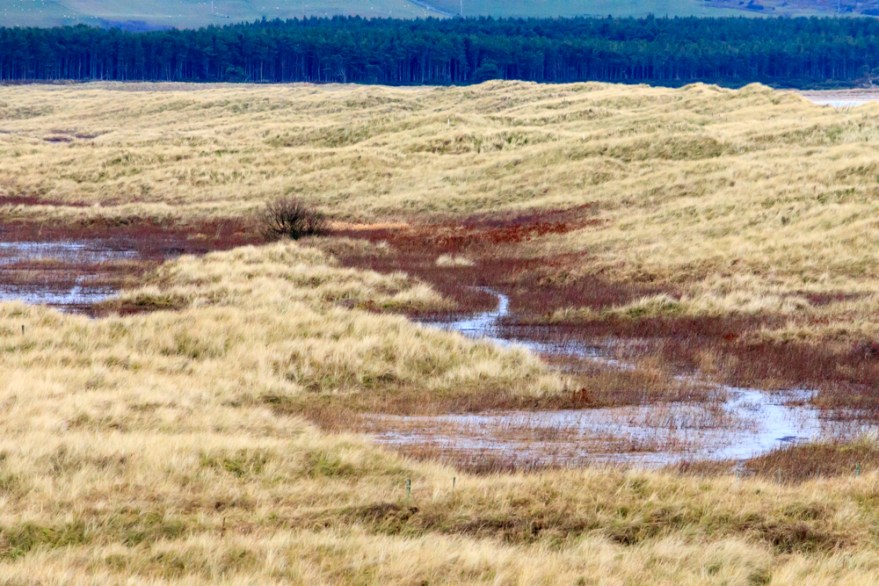
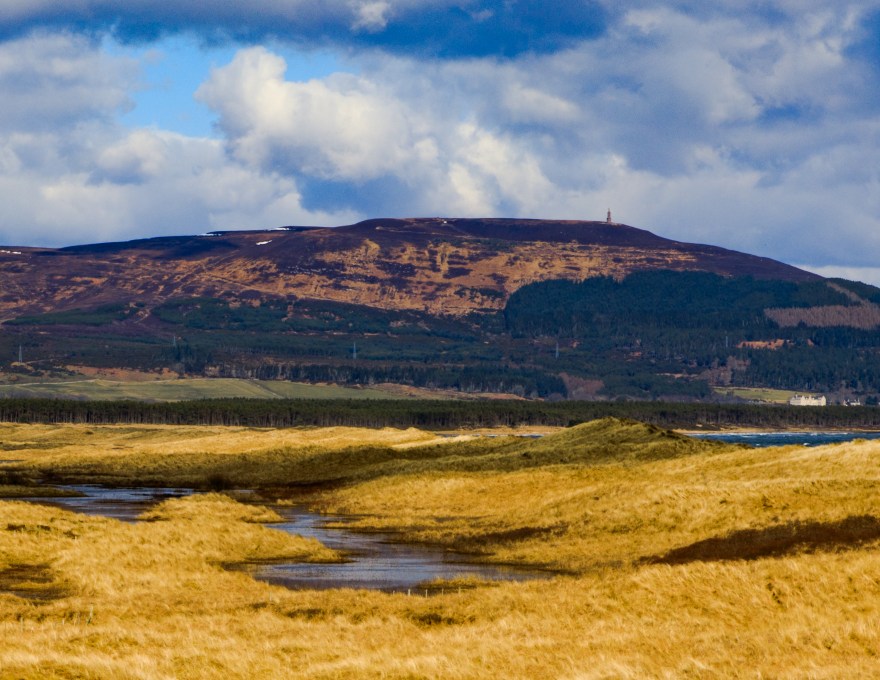
Now that I have arrived back in Scotland I will be able to capture some of the imagery I will use as the reference bases.  The particularly harsh winter NE Scotland experienced this year has flooded the area behind the fore dunes quite extensively and considerably more than in recent memory.  It gives the appearance of one enormous dune slack rather than the typical isolated ephemeral dune slacks.  It is a glorious example of how dynamic and ever changing the Coul Links are in the face of the forces of nature.


GERRARD, S., , The Dunes. Available: https://www.sophiegerrard.com/work/the-dunes/ [Mar 15, 2018].

KLETT, M., 2003-last update, Yosemite in Time. Available: http://www.markklettphotography.com/yosemite-in-time/ [Mar 15, 2018].

KLETT, M., 1979-last update, Rephotographic Survey Project. Available: http://www.markklettphotography.com/rephotographic-survey-project/ [Mar 15, 2018].

WEBB, R., 2010. Repeat Photogrpahy. Island Press.


Week 7 – Micro-project

This week’s second exercise involved pairing up with a classmate and devising a brief for each other that should take no more than a couple of hours to complete. I paired with Simon Johnsen.  I provided Simon with the following brief:

I am interested in places over time and my major project is about that mainly. For your brief, I would like see what you do with this concept and would like you to pick a place in your village that has either a distinct change in appearance or activity level through the course of a day. Pick a perspective you find most interesting and photograph that place at different times of day and or night in the course of one day, or over several days as you can fit it in. Prepare a small series of at least 3, and as many more as you wish or have time for, showing how that place changes in time.

Simon provided me with the following brief:

I want to see how you adapt to a loss of control so I want a set of 12 shots, you have to pick a starting point, walk in any direction for 5 minutes, stop and take a photo and then carry on walking, you have to make the shots as diverse as possible but try to create a narrative through the series.

I was pleased to get this brief and a bit intimidated at the same time.  I know I have rarely gone into a photo shoot with a prescribed outcome let alone an outcome that included a cogent and cohesive narrative.  I wrestled for a couple of days about where I would go to enable me to capture diverse images and be able to put them together in a narrative while being constrained to having to move a particular amount of time between images. One of my classmates (who shall remain unnamed) I could find a place I liked, walk around in a circle for 5 minutes and take another photo and that it would meet the letter of the brief.  True enough perhaps, but I thought it didn’t meet the spirit, and I was looking forward to the challenge of doing something other than nature photography and trying to tell a story.

I choose to go to a town about 30 minutes away from my home that I knew had a concentration of visually interesting places in reasonable proximity to each other.  It is also a town with a rich historical background and which is known for at least two very prominent affiliations; horses and atomic energy.  Aiken since it’s founding has always been about horses.  Founded by railroad men, it became known as the Aiken Winter Colony and the wealthy, primarily from the North East, came with their horses to enjoy the temperate weather.  Currently, there are 72 different equestrian disciplines being trained in the Aiken area.  Even though for this project I chose not to focus on it, the second area for which Aiken is known in the Savannah River Site, which is home to a nuclear power plant, but more significantly was one of the principal nuclear weapon design and production facilities throughout the Cold War.

While I have been to Aiken many times, and was generally familiar with the town, this project took me to specific places I had not been before.  It turned out to be a journey of discovery for me too and I hope I have been able to reflect it in the work I produced.  It is entitled, 5 Minutes to Somewhere, and here is the link where it can be found.

5 Minutes to Somewhere

https://spark.adobe.com/page/lPygM8eMXN19v/

Week 7 – Faux Pas

The first of the exercises this week was to post an image that was captured by accident or was a mistake somehow, but that in the end was an image that held some interest or value

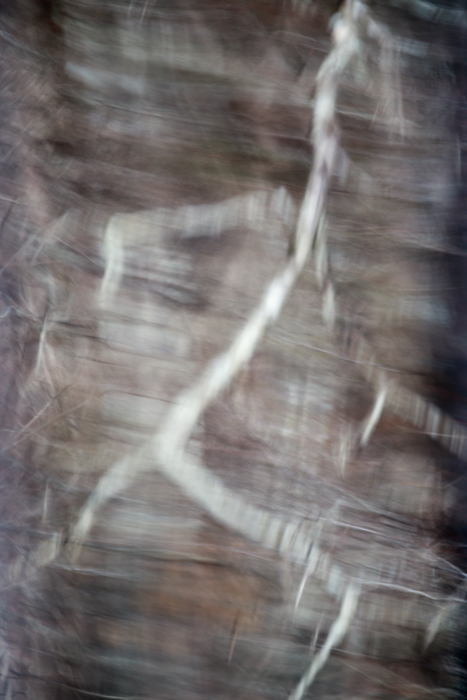
I was shooting photos from my deck with my 600mm lens when I noticed reflections in the windows of the wood behind the house.  To my eye the reflections were clear and intriguingly patterned, but the windows were just inside the minimum focal distance for that lens. When I downloaded the images, I was quite surprised at the stick creature running through the wood that appeared in front of me as I had not seen that shape with my eye when capturing the image.  Though abstract and far from the crisp realistic images for which I usually strive, I found the result hauntingly beautiful.

Stick Creature-3685

Quite interestingly when I designed and built this house, I found  slab of granite that I thought was the most amazing piece of natural art.  It is 5′ x 8′, weighs 750 lbs, and hangs on the wall of my dining room.  I was attracted to this particular piece of stone because of the colours, the striking veining that made it a Rohrshach test, and the particular image I saw when I looked at it.

Granite-4057

The similarity to the reflected image is quite remarkable.  Chance; serendipity; my life is punctuated by aliens or woodland creatures?  No matter, I glad they are here for whatever reason and by whatever means.

Week 6 – Reflections

This week’s work was focused on the preparation and presentation to the tutors of our oral presentations.  I took the time to look at the exemplars that were posted and found them diverse and revelatory.  There were things I liked and disliked about each, but all displayed impressive depth and critical analyses of their influences, motivations and inspiration.  These are things I have not given enough thought before.

In the tutor review I got some very valuable feedback on the presentation content and the project which allowed me to think about the project in a different and more sustainable way.  It pointed out deficiencies in the depth of my research that I need to rectify.  I have been so focused on trying to decide what I wanted to do and how I might go about it that I hadn’t focused enough on critical analyses and research.

After the review I had a better frame of reference to re-examine and understand the exemplar presentations which helped a great deal in preparing the next draft of my oral presentation.  I have been struggling a bit with technology trying to find a platform to make the presentation come to life as I envision it.  I believe the content is now nearly nailed and the project Coul Links in much clearer in my mind and in the presentation.  A couple more tweaks on the presentation platform to improve the polish and I will be there.

Coul Links Small-0613

Coul Links Dunes and Dune Slacks (Dec 2017)

Week 5 – Reflections

This was an full and interesting week with the coursework on ethics and the formulation of my oral presentation.  I hesitated to review the exemplar presentations until after I had completed my first draft, and when I finally did, I realized I had a way to go both in terms of polishing the presentation and more importantly in terms of truly contextualizing the project and giving it a critical basis.  The peer reviews were quite favourable on the topic I chosen, and not nearly critical enough on the depth of the content or the way it was presented.  But it was a good start and only the point of departure for further refinement.

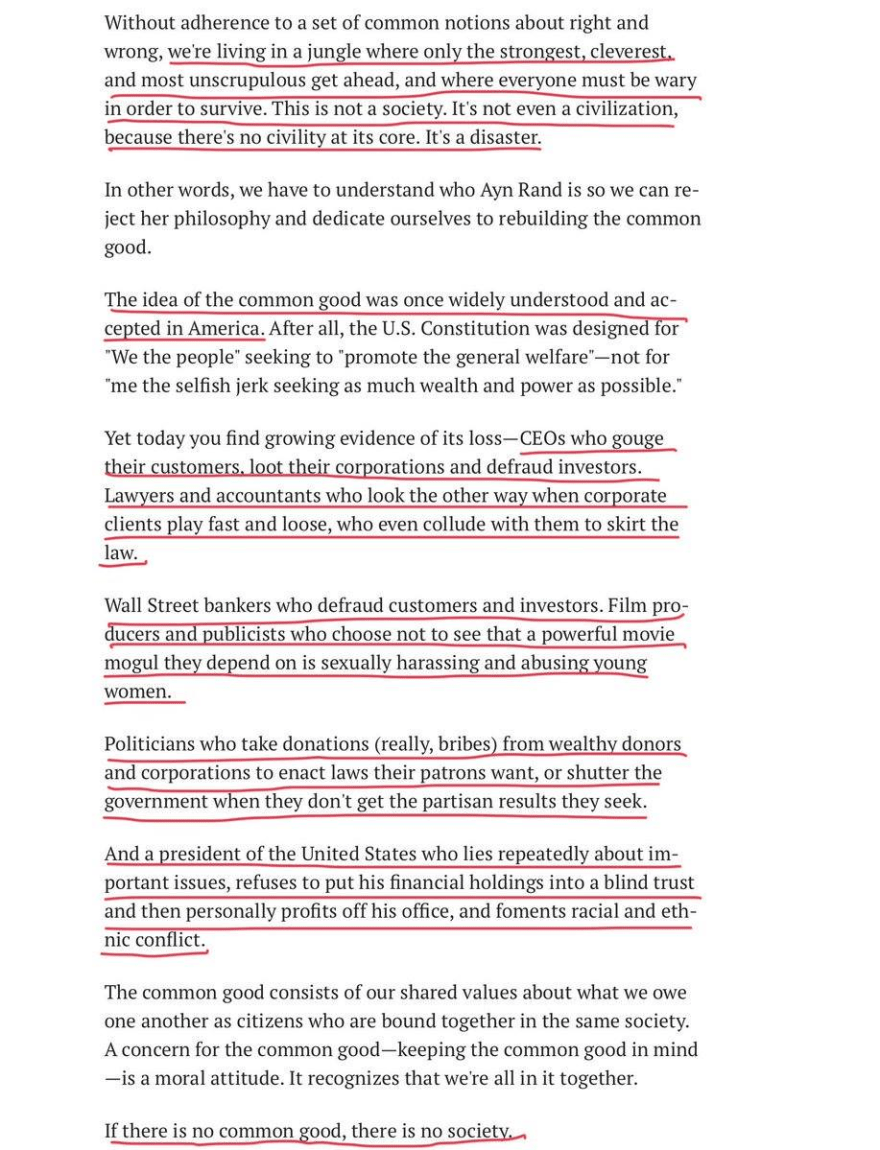
On the topic of ethics, in saw a Facebook post from Robert Reich, former US Secretary of Labor and Chancellor of the School of Public Policy at University of California, Berkley.  He has a book about to be released on the loss of common good.  Below is an excerpt from that book that he posted on Facebook.  While his intention was not directed at photographers, but I think there is relevance to photographers nonetheless as it speaks to ethics.  It postulates the seemingly increasing ethical lapses across business, politics and personal behaviour are due in no small measure to an erosion of the concept of common good.

28618860_1884943898184864_5922952484869177849_o

As photographers, we operate within societies in which moral attitudes and boundaries of propriety have changed to the point of where it is often not clear whether civility has disappeared completely.  I am not naïve enough to suggest that the genie can be put back in the bottle, but we as photographers have choices to make every day in who or what we photograph and how; where we choose to publish and how we want our work to be used.  And we have the choice to use our art to attempt to elevate or to contribute to the decline of societal values.

Week 7 – Chance and Serendipity, Creative Restraint

Do you see chance as a key part photography? To what extent does it play a role in your own practice? How might you develop your work by embracing change or making new opportunities? What arbitrary parameters might you impose upon yourself to expand the creative possibilities of your own work?  

These are all questions asked in this week’s lessons.  In my practice and throughout most of my photographic experiences I would say chance and serendipity have played and continue to play a significant role.  I have always and still do shoot almost exclusively out of doors.  That alone introduces one of the biggest factors of chance, the light.  Is it there, what is its quality, am I in a position to use the light to its best advantage?  Yes, it is possible to preplan and to position oneself where the angle of the light is optimized, and watch the weather forecasts with the hope of getting it right, but in the end whether it all comes together is a matter of chance and beyond the control of the photographer.

When photographing wildlife, there is a great measure of chance and serendipity in play at all times.  Again planning a preparation can improve one’s chances, but in the end it is just a matter of chance whether something, anything, you might want to photograph will show up, and if it does whether it will be in a position that allows a good image to be captured.

I don’t find that I am at all fussed by these elements of chance and serendipity.  I have  always been drawn to the interactions of colour, light and patterns.  It is to an extent, a basic biological phenomenon of vision, but a talent to recognize in a timely manner the significance in any given moment.  For a photographer it is essential to be able to recognize those instances quickly and have the skill with one’s equipment to take advantage of the opportunity.  I believe this to be true whether one is doing street, sports, nature, reportage and likely other genres of which I have yet to think.

The concept of boundaries is an interesting one and deserves thought and discussion.  Art Morris, in his book The Art of Bird Photography and in instructional videos he has done, suggests when photographing birds to confine your field of intention to a 15 degree wedge in front of you with the sun directly behind to get the optimum lighting conditions for good bird photographs.  I find in areas I work frequently that set up is often difficult or impossible to achieve, and that I as a consequence endeavor to cover too broad a field of intention.  I think it might be wise to slow down, be more patient at times and accept that for the truly remarkable photograph, I might need to wait longer for the subject to come to me and the light to be right.  I think sometimes I have succumbed to the desire to get the shot, but as I have become more skilled, I need slow down to a degree and work to get the best shot possible.

I also believe I have been operating principally on the self imposed constraint influenced by so much of the wildlife photography I have seen over the years of creating portraits of birds.  This is true also because I never gave much thought until now of contextualizing my work and only sought to take good photographs as stand alone objects.  Now that I need to consider context, I am beginning to realize there may be other ways to tell a natural history story and the portraiture is only one piece.

MORRIS, A., 2003. The Art of Bird Photography. 1 edn. New York: Amphoto books.


Coul Links

A great deal of time these past two weeks has gone into deciding upon which project to pursue and how to go about it.  Ultimately I returned to the concept I had when I applied for the MA programme, and began preparing the draft outline for a proposal and the oral presentation on the project titled Coul Links.  Once decided, it was relatively straightforward to pull references and begin researching those documents and sources to compile a bibliography of relevant sources and data that would support execution of the project.  The Oral Presentation is complete and form to submit following this week’s review with the tutors.

In the Coul Links project I have found an evolving story that allows me to blend photographic skills and interests with knowledge and experience in biology, project management, construction and one of my other life passions, golf.

My research for this module and hopefully through into the Final Major Project will be centered around this extraordinary parcel of land in North Eastern Scotland which is embroiled in controversy over the primacy of the economic needs of the region vs. the desire to preserve and protect from development a unique natural environment.

The developers have submitted their planning proposal to the Highland Council to build a world class golf course on one of the last untouched parcels of links land in Scotland. The site lies within a Site of Special Scientific Interest, a Special Protection Area, a RAMSAR Convention on Wetlands of International Importance site, and within the Loch Fleet National Nature Reserve. The site also has potential historic and archaeological significance.

The application has been extremely controversial sparking strong debate and heightening emotions on both sides of the argument. Highland Council are meant to take a final decision on 17 April.

In this project, I will use documentary, landscape and natural history photography to document the construction of the course and buildings, to assess impacts to the landscape, flora and fauna of the area, and any archaeological discoveries.

Still photography, and aerial still photography and videography will be used to document the base state and change states over time in the landscape overall, specific habitat areas, as many species as possible’ steading and other buildings on site that are to be repurposed, and the construction process itself and the people undertaking it.

I plan to do archival research through the History Links Museum and Cambusmore Estate from when the property operated as Coul Farm.

Ultimately I hope to span the proposed 18 month construction cycle (assuming approval of the planning application)

There are some factors which weigh on the success of the project. On the plus side I have established relationships in the community and with the developer, from whom I have received permission and support to undertake the project.

The principal concerns lie in the approval of the project and the timing of that approval. If the plan is rejected I will proceed with the work for this module, but will probably rethink the Final Major Project. If the approval is delayed it could impact my ability to complete the project as my Final Major Project and that too may require adapting the plans or pursuing a different subject.

For the work in this module and prior to my return to Scotland, I will be continuing to hone my skills in natural history photography and post processing. I will be using the Planning Application documentation, in particular the Environmental Statement to further research the planned development. I will use mapping resources to identify candidate fixed sites with adequate ranges and angles of view to capture the baseline and change states. I will also be practicing with the drone to refine the flight and mission planning processes to ensure repeatable perspectives for the aerial photography.

Upon returning to Scotland at the end of March I will be coordinating with the Project Management team, confirming and selecting the fixed point locations and beginning the baseline state image capture. I will establish the drone mission profiles and begin the baseline state capture from the air. I will also be photographing the native species and areas of primary environmental concern. And lastly I will be starting on the archival research.