Week 3 – Some non-Project Work

I belong to a local camera club which has some excellent and highly knowledgeable members and which has been a good resource over the past few years.  Guest speakers, technical workshops, and peer and outside judged competitions have been helpful in increasing my knowledge, inspiring work in different subject areas, and learning about how others see photographs.  Monthly competitions, some with specific themes and others open to all subjects, are conducted with colour, monochrome and creative categories.   The latter requires manipulating a photo in a way to create an image that could not be seen in the real world and have been useful in increasing my skills with Photoshop.  This month’s topic was “Road Vehicles” and while in Rotterdam a couple of week’s ago, I spotted this row of “hire bikes” inside an architecturally unique building.  The scene caught my eye and lent itself to a really interesting composition. It is one of the best photos I have ever taken. The photograph below titled “Geometry Lesson” was selected as the winning photograph in the Colour category.

Geometry Lesson-104357

Geometry Lesson

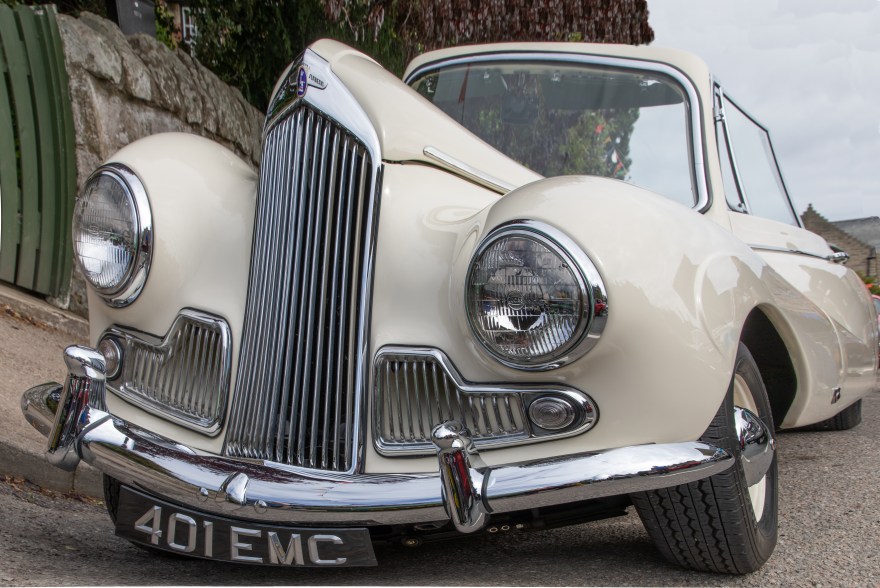
In the Creative category I entered a heavily manipulated photo of a Sunbeam Supreme taken at a Classic Car Rally stopover in Dornoch, titled “Smile for the Camera”, which placed second a close one point behind the winning photo.

Smile for the Camera-2

Smile for the Camera

While neither of these photos have anything to do with my project work, they actually speak volumes about me as a photographer and the diverse interests I bring to my practise.  Yes I do a lot of natural history work and I do really like photographing wildlife, but when I have a camera in my hand I am drawn to interesting movement, colours, shapes and light like a moth to a flame.  Even in my wildlife work, it is these same underlying factors that draw me to trigger the shutter.  And I want to have fun with my photography, even if it brings income, it can never be a drudge or I won’t take the work.

Week 2 – Whose Image is it Anyway?

This week’s forum looked at the issue of appropriation and the court case involving Richard Prince and Phillip Cariou.  Below are my thoughts and posting.

While the court found that for all but 5 of the 30 appropriated works Prince had sufficiently transformed them, I find it difficult to agree.  I also find it difficult to swallow that because Cariou only made $8000 and Prince made over $10 million that somehow factored into the evaluation that made it all right for Prince to have appropriated the work of Cariou.

At the risk of straying slightly for a moment from the principal question being asked, I personally find it sad and unfair that someone like Prince can be so lazy in the creation of his work, and I have to say that I am amazed that there are people with more money than sense who will pay more than $1 million for this (in my opinion) tripe.  But then this is the world we have come to in which style often trumps substance and that monetary value somehow bestows legitimacy as good art.  As many art auctions in recent years have shown, the price paid for art is more often a reflection of the ego of the buyer and their desire to “one-up” the last obscene price paid for a piece of art so as to have bragging rights; until the next auction at least.  The link below is to a Guardian article article titled  “Art prices at ‘obscene’ levels as Chinese join high-spending elite.”

https://www.theguardian.com/artanddesign/2018/may/19/art-market-rising-prices-modigliani-hockney (Links to an external site.)Links to an external site.

A second article from New Republic in 2013 also address this subject.

https://newrepublic.com/article/115823/record-auction-prices-show-moneys-victory-over-art (Links to an external site.)Links to an external site.

And now to bring the discussion back to the original question; Prince, the galleries that display his work and the buyers of his work basically have by their actions condoned the misappropriation of Cariou’s work.  Ignorance, the allure of money and an overall erosion of ethical behaviour are evident in my mind and the fact that a high court has also given its blessing still doesn’t make it right.


Week 1 – Looking Back

For this week’s forum activity we were asked to discuss project work produced during the break by:

  •       Introducing the topic of your project
  •       Introducing the area of concern or your angle
  •       Summarising work made in previous modules
  •       Describing the intentions you had for the break
  •       Sharing work produced during the break: three – five images is enough

The topic of my project is a unique piece of land in northeast Scotland; how it changes over time in response to both natural and human influences, and how that land is used by humans and other species.  Coul Links has served many purposes over the centuries and it borders one of the most important wintering sites for a number of species of birds. It is a designated site under Scottish, UK and International law and there is a pending proposal to use relatively small portions of the land to build a golf course.

In the prior modules I began the repeat photography survey work to establish baselines and watch how the land changed through the seasons using both a drone and terrestrial methods.  I have also been observing and photographing flora and fauna to get a sense what is there and how it changes through the year.  Most recently I have also begun to pay more attention to the current limited human use of the land and traces of past human use.

There has been some controversy about the use of a designated site for a golf course and environmentalists have mounted campaigns (mostly based on out of area support), but the golf course project has strong local support and was approved by the Highland Council over the objections of the Planning Department.  At the beginning of August just before the final approval would have been granted the project was “called in” by the Scottish Government for additional review delaying the project decision by anywhere from 6 to 18 months.  As a consequence, I scaled back my direct project work during the break and used the time to work on some commissioned work some of which has direct relevance to the Coul Links project.  Royal Dornoch Golf Club (full disclosure – of which I am a member) and the burgh of Dornoch lie 3 miles to the south of Coul Links.  RDGC is ranked as the 4th best golf course in the entire world and number 1 in Scotland and serves as part of the reason the developers wish to build the course at Coul Links. I was asked to create a limited edition book in support of a charity event hosted by the Moderator of the Church of Scotland at RDGC in support of the Dornoch Cathedral building fund.  So much of the break time involved getting the final images needed for the book and completing the design, layouts, text and publication of the book.

Below are examples of the images I made during the break.

untitled-0013.jpg

untitled-0016.jpg

untitled-0018.jpg

untitled-0019.jpg

untitled-0051.jpg

Week 2 – Business Planning

Preamble

I have no plans at this point to necessarily start a “traditional” photography business, however, I recognise that if I sell my work I am a professional photographer and I am running a business.  While those statements may seem at odds, and perhaps they are to a degree, I think they are clear enough to articulate my intentions. I am 65 years old and in the enviable position of not needing to use my photographic practise to pay the bills.  I have managed large organisations with multi-million $ budgets in the past and have started and owned two businesses, so I am familiar with the requirements of running a going concern.

Mission

I plan to photograph when I want to and what I want to, and I reserve to right to photograph something some one else asks me to photograph if I have the time and the interest in pursuing that work.  For my personal work, I will pursue subjects and projects that interest me, and I expect the output to take the form of books and work for sale locally.  I will always endeavour to produce a high standard of work, whether for personal projects or clients, that is technically and aesthetically worthy of the time and effort I invest.  I will always approach my work ethically and with sensitivity towards my subjects and will never intentionally create work that is harmful or demeaning to individuals or the environment.  I will use photography as a tool to express my creativity and interests, and to show others the world through my eyes if they wish to see it.

Product

I produce photographs and books for my personal projects, and for my client work will deliver aerial or terrestrial photographic work in the format they need for their specific project.  My personal project work has mostly local interest though it appeals to tourists visiting the area as well.  My wildlife work, birds and macro work in particular, is strong and my North of Scotland country life regularly generates interest.

Market

I have already one shop/gallery that is exhibiting my work for sale and have had several sales resulting from my August exhibition.  Books are available online and in local shops.  My market is at this point is predominantly local, however, when I move toward monetising my website I believe there will be an opportunity to sell prints further afield.  Word of mouth has resulted in several new commissions.


Unseen Amsterdam and Nederlands Fotomuseum

I attended Unseen Amsterdam last Friday and the visited the Nederlands Fotomuseum in Rotterdam on Saturday.

From the Unseen Amsterdam programme:

“Welcome to the seventh edition of  Unseen Amsterdam, the leading annual event for contemporary photography showcasing artist, both emerging and established, who are pushing the boundaries of the medium.”

Perhaps I am a philistine, but I must admit to finding much of what I saw on exhibit unintelligible and frankly trope ridden.  If this was meant to be artists pushing the boundaries of the medium there were certainly many pushing in the same directions.  There were a number of different photographers that obscured the faces of their subjects with masks, others that photographed the backs of people’s heads, several who put things over the heads of their subjects, super unnaturally coloured photos, and the last trope, drawing random lines over the photo for no apparent reason.  While the quality of the work was of a very high standard and some of it visually pleasing, a great deal of it struck me as people trying to be different by resorting to gimmicks.  I found that work to be unappealing to my eye and tiresome after seeing the same tropes over and over.

If I were to make a generalised statement of my impression of Unseen it would be that it was a good art show, but not so good a photography exhibit.  Yes there were photographic elements in all the work, but there seemed to be such a focus on the artistic that the fundamental beauty and nature of photography is lost.  Bill Jay in Occam’s Razor wrote “I am sure you will agree the contemporary photographer is easily seduced, even obsessed, by the love of Art, which emphasizes personal glorification at the expense of artisan functionalism.  The logical conclusion is a hierarchical structure even within the photographic community – fine artist at the apex of the pyramid, artisans at the base.  In such an atmosphere festers neurotic insecurity and false pride, as well as an alienation from the medium’s intrinsic characteristics that have made it the most relevant social art of our age.  I view with concern the empty genuflections associated with Art’s blessing.”

What I did find useful and interesting at Unseen were the different ways photos were mounted and or framed and displayed in the exhibit, and even more interesting and useful the book section of Unseen.  I spent a good bit of time wandering around the book section looking at the different ways artists had their work published  and collecting cards from various publishers and graphic designers.  Although here also I found some trends repeating, such as the accordion book which I thought in some cases was very appropriate to the subject and in some others not so much.  Nevertheless, I was able to see a much broader range of photobooks than anywhere I have ever been and certainly more than I have access to in the remote village of Dornoch in the north of Scotland.

n2GflvEU9AXB6JJaffOWcWHvFwrO5c01akxcHu5hraIpX92IB[1].jpg

In contrast, my visit to Nederlands Fotomuseum was brilliant.  A special exhibition of the work of Cas Oorthuys was on exhibit.

DSC06750
Photo courtesy of Fons Delrue

One of the most renowned 20th century Dutch photographers, Oorthuys’ work was very much influenced by the avant-garde and Bauhaus movements with high and low perspectives and compositions along diagonal lines.

2di625SyZf-5KkgROLE1Fg-jqf8NK6FdhugtAcT-tuEpX92IB[1]

His wartime work, much of which had to be made covertly with 35mm cameras provided important documentation of the German occupation and the last year of the WWII.

His post war work earned him a reputation as a “reconstructionist photographer” as he documented the rebuilding of Rotterdam and Dutch industry.

Egq9w5Qq29G4hnGtksgest98L2UYxhbUAZqFdREZ_ckpX92IB[1]

He was the lead photographer in the creation and publication of travel books for over 40 countries and took commissions to capture images of all the different traditional regional dress of Holland in the time before modern influence caused much of it to disappear.

Among his last works was the Stedelijk Museum Amsterdam exhibition “mensen people” in 1969 which was a collection of 120 photographs depicting people in all their behaviours and emotions but emphasised laughter and its liberating quality.

ZsH_JKVlOVDU5v6WMxTtb7IA42NBqo9zhluh60uo3h4pX92IB[1]

I was struck and inspired first by the the breadth of Oorthuys’ work and then by the quality in every genre in which he worked.  He was able to capture the soul of individuals in his portraiture, the souls of cities and nations in the cultural, architectural and industrial work.  I have in the past never allowed myself to be restricted to a particular genre and in seeing how splendidly versatile Oorthuys was, I have to ask myself why is it necessary to specialise or restrict oneself to a particular genre.

Again Bill Jay from Occam’s Razor; “The crucial question is this: What relationship does a personal life have on an individual’s photographs – and vice versa.” “The answer, …life and art should have everything to do with each other. In practice, as I view the medium of art photography, from my outsider position, art and life have very little connection.”  “A photograph is the end product of someone caring about something ‘out there’.  The best photographs exude this caring attitude in a manner which is not definable but which is very evident.” “If a photographer is communicating a personal passion for something, anything through pictures then the images are also revealing, incidentally, a great deal about the photographer as well as the subject.  His or her attitude to life is evident.”  Cas Oorthuys’ passion for his subjects was evident and his work was in no way diminished by his wide range of subject matter over time.  So it is possible to be versatile and diverse in one’s practise as long as there is true interest, passion and connection with the subjects.

References:

Jay, B. (n.d.). Occam’s Razor: An Outside-In View of Contemporary Photography (Third). Tucson, AZ: Nazraeli Press.

Note:  Apologies for the quality of some of the photos as they were taken quickly with a mobile phone under less than ideal conditions and primarily as a set of visual notes for me to remember key aspects of the exhibit.

Publications – Closing out Surfaces & Strategies and transitioning to Sustainable Prospects

While not directly related to my Coul Links project work, I had been working on project in support of a charity function that would result in a book that would be a very limited edition and which could be auctioned at the event as part of the fundraising activities.  The work involved photographing Dornoch Cathedral and all of the holes of Royal Dornoch Golf Club as well.  I then need to write the copy, edit and publish the commemorative book.  So while not directly project related, it did provide valuable experience in photographing golf course landscapes and using the drone to capture perspectives of the course and cultural structures that would not otherwise be possible.  It also provided another valuable opportunity to produce a publication.

I was able to use the process of a dummy book for the initial concept and editorial reviews which proved very useful to me and to the committee for which I was producing the book.  The next stage of review was accomplished with a PDF version of the book created directly from Lightroom.  The need for fresh eyes and plenty of them cannot be overemphasised. I used three separate individuals in series to review the PDF.  I made corrections after the first review so the second reviewer had a “clean” version to review and yet the second and third reviewers each found additional and unique things that needed to be corrected.  Did something slip through the cracks still?  Perhaps, but I will be surprised because my editors were so competent and thorough.  So great thanks go to Jerry Horak, John McMurray and Roger Boyce for their time and efforts.

It was a very short time frame to produce a quality publication and it was a challenge to get all the photos of  both venues with weather and limited time for best light.  I was able to make photos with a combination of  drone and traditional DSLR work.  Fortunately the golf course and Cathedral are frequent and favourite subjects so I did have work in my archives that could be used to augment what I took in that past few months.  Some technical challenges with the drone resulted in at least one day’s work having to to be largely scrapped because the photos were not sufficiently sharp despite having had extraordinary light quality during the shoot of the photos taken that day had to be scrapped.  This put additional pressure on as the deadline loomed.

I began the book design in the Adobe CC InDesign and completed the publication design in Blurb using their proprietary design software.  I did learn a great deal more about publication design than I did with my first book and was able to produce a far more sophisticated layout.  I was able to explore far more features in layout and design that I didn’t even know were there when I did 19 Sutherland Bridges.  In the end the book totalled 60 pages.  If I had another few weeks there might have been an opportunity to get additional photos that may have been even better than the ones I chose to use, but then that process too could be infinite.  At some point one always has to say, it is time to publish.

A PDF version of the book can be viewed via the following link.

Moderators Tourney Commemorative Book_Final

I must say I really enjoy to idea and the process of creating books and I look forward to doing it again soon.

Exhibitions – Closing out Surfaces & Strategies and transitioning into Sustainable Prospects

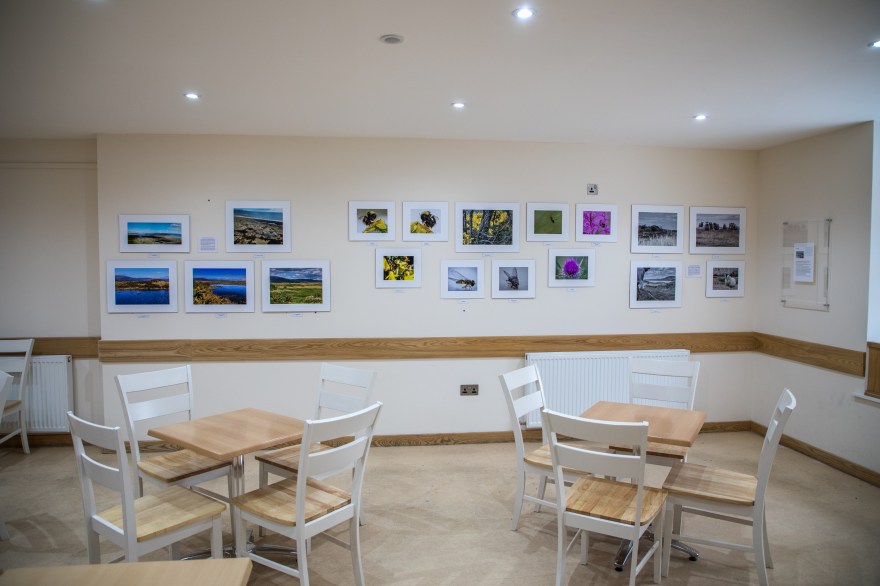
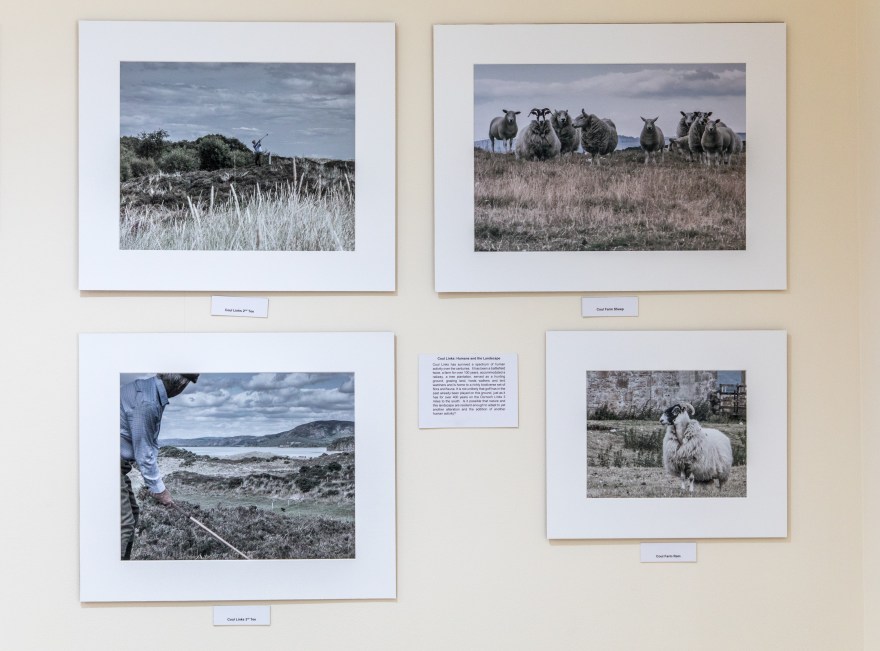
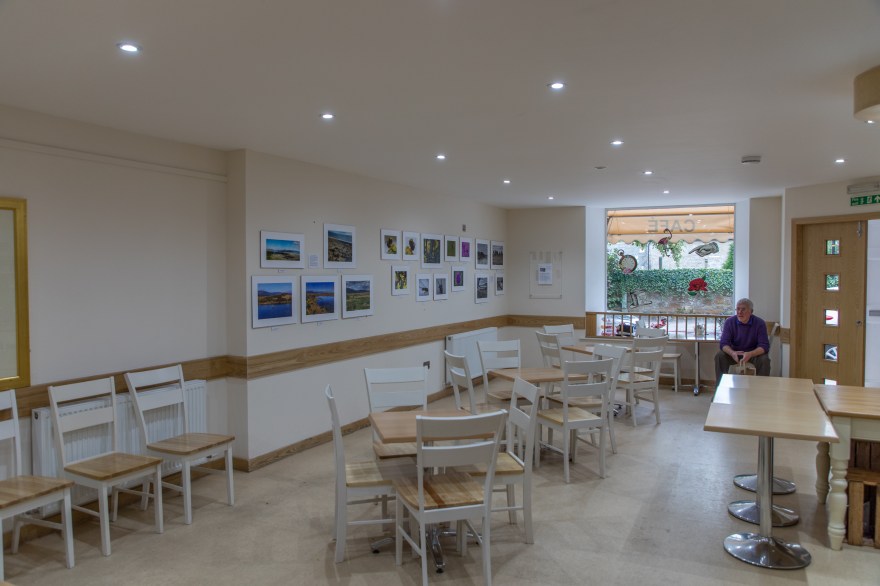
As part of Surfaces and Strategies we were meant to put on a physical exhibition.  Due to timing issues with the exhibition space, I was unable to do my exhibition until the week after assignments were submitted.  Nonetheless, I did hold a physical exhibition at a local cafe where the owner was very pleased to have my work and asked that it stay on beyond the original week that was planned, and has asked to have some of my work permanently available for display and sale.

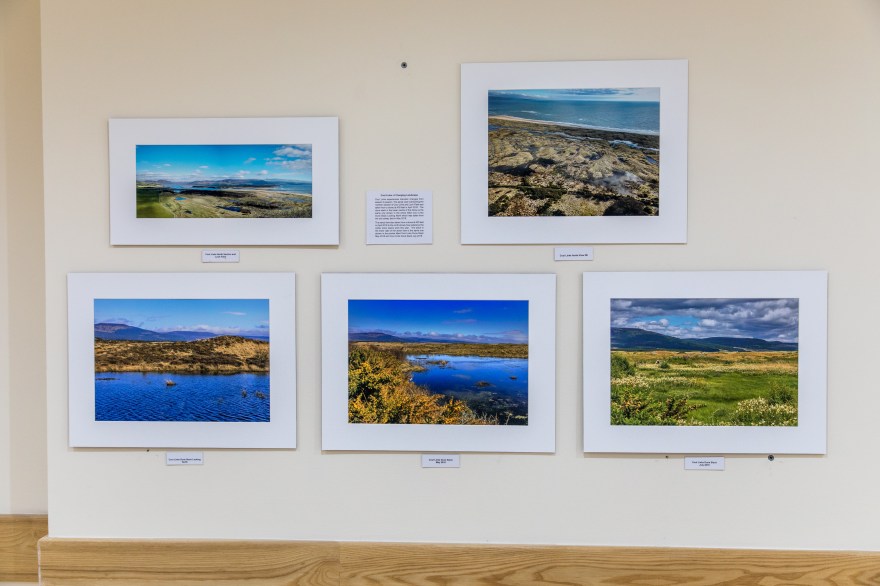
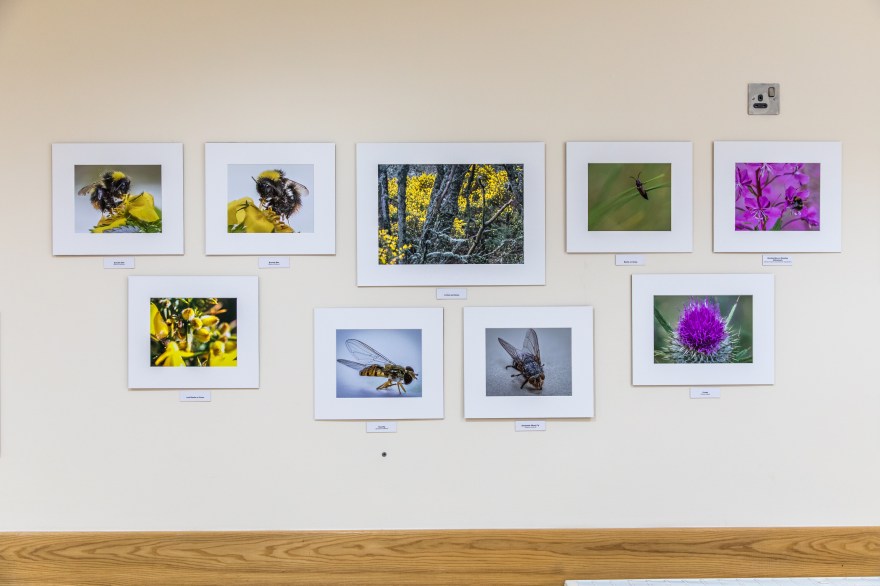
I selected work in three categories and organised the work accordingly.  I chose the groupings because I wanted to not only show some of the project work on Coul Links which is a topic of interest locally, but also to show work that I suspected would appeal to the people who might view the exhibition.  The section on the left showed elements of my repeat photography work and how noticeably the landscape changed with the seasons, while the section on the right introduced elements of how Coul Links is used today.  The centre section was devoted primarily to macro and super macro work because I thought it would capture the interest of the viewers.

Organising how the the pieces of work were to be displayed was accomplished on the floor of a spare bedroom where I laid out and kept shifting the work until I thought it was thematically and visually cohesive and coherent.  In order to facilitate the hanging, as we had a fairly small time window to get everything on the wall, I made spacing templates out of mounting board that would allow consistent spacing between the photos in each group.  I also made caption placards and descriptive placards for the the sections that explained in more detail what was being shown.  We used a string and a level to get the top line established and from there used the spacing templates to efficiently and quickly mount the photos on the wall.

Exhibition-8714Exhibition-8715Exhibition-8716Exhibition-8717Exhibition-8718Exhibition-8725

Additionally, on the evening of the opening reception I had a video set to music of aerial drone footage running on loop and that drew a great deal of interest.  The video provided views of Coul Links that even those who were familiar with the land had never seen.  The opening reception on 27 September 2018 was a great success.  It was attended by about 30 people before the evening was out. I sold two copies of my 19 Sutherland Bridges book and had several expressions of interest in purchasing photos that were being displayed.

I found it interesting how different images resonated with different people.  Some people really liked the landscapes, while others loved the sheep, but the greatest share of strong positive reactions were for various images in the super macro work.  I had initially resisted the idea of doing the physical exhibition, but in the end was very glad that I did even if it didn’t happen until the assessment period.  I am indebted to Donald Goldsmith, the owner of Grace of Dornoch Cafe and Deli for making his establishment available and catering the opening reception all at no cost to me.

On 24 September I was invited by the Dornoch Chapter of the Scottish Women’s Institute to give a 45 minute talk and exhibition of my landscape and wildlife work.  While I brought some of the photos used in the prior exhibition, this event was primarily and slideshow of 90 pieces of work and accompanying commentary.  This evening also went exceptionally well and the attendees were interested and engaged throughout. I received a large number of positive comments and lovely letter after the event.

I am looking forward to the next opportunity to display my work and hope to be able to have even larger prints than the A3 and A4 sizes I used in these events.  I do need to sort out how to properly value my work so I can set prices prior to beginning an exhibit.


Week 12 -Wrapping Up Surfaces and Strategies

As I have said in prior posts this module has helped me to evolve in a number of ways.  It has definitely helped my confidence soar in my ability to create work and show my work.  It has deepened my understanding of photography overall, and is beginning to help me understand my place in the world of photographers.  I have miles to go on the journey, but I am well down the road and on the right path I think.  More time to read and more exposure to other practitioners is part of what has been building the foundation of understanding.  Being pushed to make work in ways I have never done, or in ways I had not been comfortable has taught more about my craft and open my eyes to other possibilities for work and ways of accomplishing that work.

I have in the past looked upon my work as quite solitary as I had been making work for years, but never sharing it.  I now find myself interacting with others on a daily basis about my work whether it is sharing it with friends or strangers, or interacting in mutual support with my wonderful cohort mates.  They have been an invaluable source of advice, support, humour, fun and without them this would have been a very different experience and not nearly so rich and rewarding.  So thank you in particular to Mick, Gem, Danny, but also to the other in Cromarty who frequent our chat group.

It feels quite good to have the assignments done and dusted.  I feel as though I made a pretty good job of it on the whole, though the assessors may not agree.  I know I have made progress and I know I will continue to do so.  I know too there are some areas that need additional focus and effort.  I am getting more attuned to research, but I need to be more disciplined  about documenting it as it occurs.  I tend to take a while to integrate what I have read and then don’t always get back t write about it.  It is there informing my work, but isn’t always adequately documented.

The parting shot from the module leader was one last assignment to create a self portrait that was reflective of the time spent in the Surfaces and Strategies module.  I have to say I enjoyed this module far more than the first for a number of reasons.  It seems only fitting that as the final task in Surfaces and Strategies that I should do something unconventional and completely different from my normal work..  At first glance you may miss it, but trust me, my image is there on a surface and in a way you might not expect to find me.  Truth is I am something of a motorhead and I had an unfortunately brief opportunity to photograph some pretty cool classics last Saturday.  This particular Austin had been once owned by King Farouk.


Austin Self Portrait small-8626.jpg

Week 12 – More Thoughts on Surfaces and Strategies’ Influences on My Practise

This module has seemed something of a whirlwind of activity with so much new each week that it has sometimes been difficult to get adequate perspective on what it all means.  Books, Zines, no camera photography, exhibitions, dummy books, workshops, video trailers, project work and trying to continue research proved to hardly be a part-time endeavour.  I read quite a lot this term and though I didn’t write about it as much or as often as I perhaps should have, there were a number of those books that drew me back to places I had bookmarked over and over.

I find myself going back to and re-reading bits of Sontag, Flusser, Berger, Kleon, Bate, Bear and Albers, Tagg, Webb and Muybridge.  Some of those works had bits that struck me straightaway, while others may have gone right over my head at first reading.  What I found though in many cases, those things that may not have resonated at the beginning have managed to find purchase in the dark recesses of my mind and like a jigsaw puzzle are starting to form a picture that I can understand.  It is not that there is anyone definitive bit that unlocked the mystery nor am I sure yet that I can clearly articulate what about any or all of them is most meaningful and relevant to me and my practise.  I do know that I feel far more comfortable with the idea of critical theory and that it has made a difference at how I view my work.

I know I have further to go in this journey and I expect ultimately it will have been and evolution and not a revolution.  The quality of my work has improved even though the focus of this course is not on the technical aspects of making photographs.  It has improved in part because of more disciplined regular practise, in part because I have obtained or improved upon technical skills, in part because I now have an eye toward what will become of my work once it completes post-processing, and in part due to a better appreciation for and understanding of what photography has been, is and could be through my research and readings of critical theory.

I am still searching for my voice in the photographic world.  While I came into the programme as a natural history photographer, and it is something I quite enjoy I am not convinced it is where (or rather the only place) my future practise will reside.  My past photographic work has been as eclectic as the rest of my life which has included several different successful careers.  I have broad interests and it comes as no surprise then that my photographic work might reflect that.  I believe there will be touchstones that will tie together work in different genres as they are the same things that sit at the core of my value system and worldview.  My natural history work is borne from those perspectives, but so too is the sports and action photography work I have done and do.

The first two modules of this course have forced me to think about my practise as I have never had to before, and has begun to give me the tools to analyse and vocabulary to better articulate it.  The framework is starting to take form, but the details are yet to be resolved.

I have for sometime been researching photographers who work in golf.  There are those that work in the more journalistic end and photograph tournaments, and there are those who work more in the advertising and public relations end of the spectrum doing landscape work that in many cases falls into the fine art category.  And there are a few that cross those indistinct boundaries as well.

Why have I been researching this?  Coul Links, where I have been doing my project work, is proposed to have a golf course of world class stature built within and adjacent to environmentally designated and protected land.   I have also been working on a personal/ commercial project at the Royal Dornoch Golf Club which is situated 3 miles to the south of Coul Links and of which I am a member.  Golf has been a not unimportant part of my life for 60 years.  I have been highly ranked internationally as a competitor and I derive great pleasure from the game itself, the ground on which it is played and the people who are part of it.  Why wouldn’t it be natural that my passions should intersect?

Kevin Murray is among the best in the business and while his work is largely in the advertising and PR category, he does fine work also photographing professional golfers and events.  His work can be seen at http://kevinmurraygolfphotography.com/ .  Paul Severn is another well respected golf photographer whose work covers an even broader spectrum of the game.  His work can be found at https://www.severnimages.com/index.  There quite a number of other excellent practitioners whose work I have reviewed, but these two serve to illustrate some key points about the genre.

What makes a good golf course photograph and is it different from normal landscape photography?  To answer the second part it isn’t that different from good landscape photography in that it requires attention to the lighting and choice of angles to reveal aspects to render the scene in a way that draws out the most interesting elements.  There are additional aspects that seem common to the best work such as the inclusion of the flagstick somewhere in the scene.  A certain amount of elevation adds dimensionality revealing contours and features such as bunkers.  The best courses in the world, and hence the most photographed, have holes or cultural attributes that make them iconic and instantly recognisable to followers of the game.  Augusta National during the Masters with all the azaleas in bloom or the clubhouse at the end of Magnolia Lane; views of Ailsa Rock from Turnberry; the Royal and Ancient Clubhouse behind the 18th green on the Old Course at St. Andrews.  Inclusion of these iconic elements is standard practise.

How does photographing golfers fit within the practises of environmental portraiture or street photography?  I would argue that it is not that different at all.  Photographing at a tournament or just golfers playing a casual round is very much like street photography in that you are looking to capture a particular moment that will be fleeting because it is either based on getting a specific action sequence or emotion and while it requires anticipation and planning to be in the right position, the actual moment isn’t always controllable or predictable.  Getting a photo of a golfer in his or her environment with purely natural lighting is again in my opinion just a variation on environmental portrait work.  The photographer is attempting to see the subject in their environment and capture some attribute of personality or emotion that is distinctive and recognisable.

The photos below are some of my work in this genre.  Why?  It bears on my project work if, and I believe it will, Coul Links development is approved.


Referenced Books:

Bate, D. (2016). Photography; The Key Concepts. The Key Concepts (2nd ed.). London and New York: Bloomsbury Academic.

Bear, J., & Albers, K. P. (2017). Before-and-After Photography; Histories and Contexts (1st ed.). London; New York: Bloomsbury Academic.

Berger, J. (1972). Ways of Seeing. Ways of Seeing. London: Penguin Books Ltd.

Flusser, V. (1983). Towards a philosophy of photography. English. London: Reaktion Books Ltd. https://doi.org/10.1016/S0031-9406(10)62747-2

Kleon, A. (2012). Steal Like an Artist: 10 Things Nobody Told You about Being Creative. Steal Like an Artist (Vol. 53). New York: Workman Publishing Company. https://doi.org/10.1017/CBO9781107415324.004

Kleon, A. (2014). Show Your Work: 10 Ways to Share Your Creativity and Get Discovered. New York: Workman Publishing Company.

Muybridge, E. (1979). Muybridge’s Complete Human and Animal Locomotion, Volume III. New York: Dover Publications.

Sontag, S. (1977). On Photography. Penguin Books. https://doi.org/10.1007/s13398-014-0173-7.2

Tagg, J. (1988). The Burden of Representation: Essays on Photographies and Histories. Minneapolis: University of Minnesota Press.

Webb, R., Boyer, D., & Turner, R. (2010). Repeat Photography: Methods and Applications in the Natural Sciences. Washington, DC: Island Press.

Referenced Web Pages:

Kevin Murray Golf Photography | Golf Photos | Top Golf Photographer. (n.d.). Retrieved August 22, 2018, from http://kevinmurraygolfphotography.com/

Paul Severn Golf Photographer /Golf Course Images/Golf Tournaments/Golf Picture Library. (n.d.). Retrieved August 22, 2018, from https://www.severnimages.com/index

Week 11- Do too many cooks spoil the broth?

Perhaps the same is true with tutors, or not.  I have simmered this stew for a couple of weeks now as when I initially conceived it I was reeling from all the completely different flavours that had seemingly been dumped into my pot.  It seemed everyone had a different view of my work and not always did I get a clear understanding of how it might be made better; only that it wasn’t right.  There were exceptions thankfully, like when Cemre took several of my proposed WIP photos and arranged them in a particular sequence in a horizontal grid and then explained why she thought that worked.  In other cases, one tutor would like a particular photo while the next thought it was rubbish, and in other cases, I was told what I was trying to communicate wasn’t clear but without much more in the way of explanation of why or what sort of things might make it better, other than try arranging them differently.

To be honest I felt confused and lost, and even at moments a bit angry.  It was clear something wasn’t right, but I didn’t know how to fix it.  With advise sometimes so diametrically opposed, I didn’t know which direction to go.  I had to in the end, step back, lose the emotional attachment to my work and reaction to the criticism and figure out how to sort through the various comments to determine if there were any common elements among them, discard the outlying and off the wall remarks (there were some doozies) and integrate what was left to something I felt I could action in curating and editing my portfolio.

The first insight I was able to distill was that what I was showing was too diverse and divergent in theme and aesthetic.  It was said in different ways and it took some time to understand that “I can’t read your visual language” was similar in meaning to “the macro work is distracting and disconnected from the larger scale work”, or “photos in this series have a very different feeling.”  I had to admit, I didn’t really know what I was trying to “say” with my photos.  My project is big, maybe too big, and it contains a number of different aspects at this point.  I have so much to say that I ended up saying nothing because the breadth of this story from a final project perspective (and yes, we are a long way from that point) cannot be told in 18 photographs that I have now.  At the end of the FMP, it may be possible to tell this story in a relatively small number of carefully curated photographs.

I also had been “hung up” by the fact that I got into this programme as a natural history photographer, even though it has never been the only thing I have done, and it is not the only thing I want to do.  It was clouding my judgement in curating my portfolio.  It is somewhat ironic, because I have always hated labels and I have spent my life defying norms and expectations.  Why should I allow myself to be pigeon-holed now?  So once again something else to let go of.

I did finally work it out on my own I think.  At least I took a decision, cut away a lot to arrive at a portfolio that is I hope worthy of submission.  It is a few paragraphs in a chapter of what might eventually become a novel or perhaps a short poem, but it seems to be coherent and cogent.  That I got there is a testament to the progress I have made thus far in the course.  I couldn’t have even had this discussion several months ago.  When I felt I had the pot on with no recipe, thankfully Cemre slipped me a couple of key ingredients that allowed me to decipher the rest.  Photography, like cooking after all is art and the flavor combinations are limited only by one’s imagination.  Baking is science and there isn’t much latitude in the recipe. I didn’t want tutors to hand me a recipe after all.

Do too many tutors spoil the broth?  At first, I thought so, but each was bringing their favourite spice to the kitchen and in the end it was up to me to understand the implications of using that particular spice and make a decision whether or not it belonged in my stew.  There were times when they made it tough to get around the kitchen to be sure, but once I cleared them out, and some of the inappropriate spices in my cupboard, I was able to put together a pretty tasty offering.